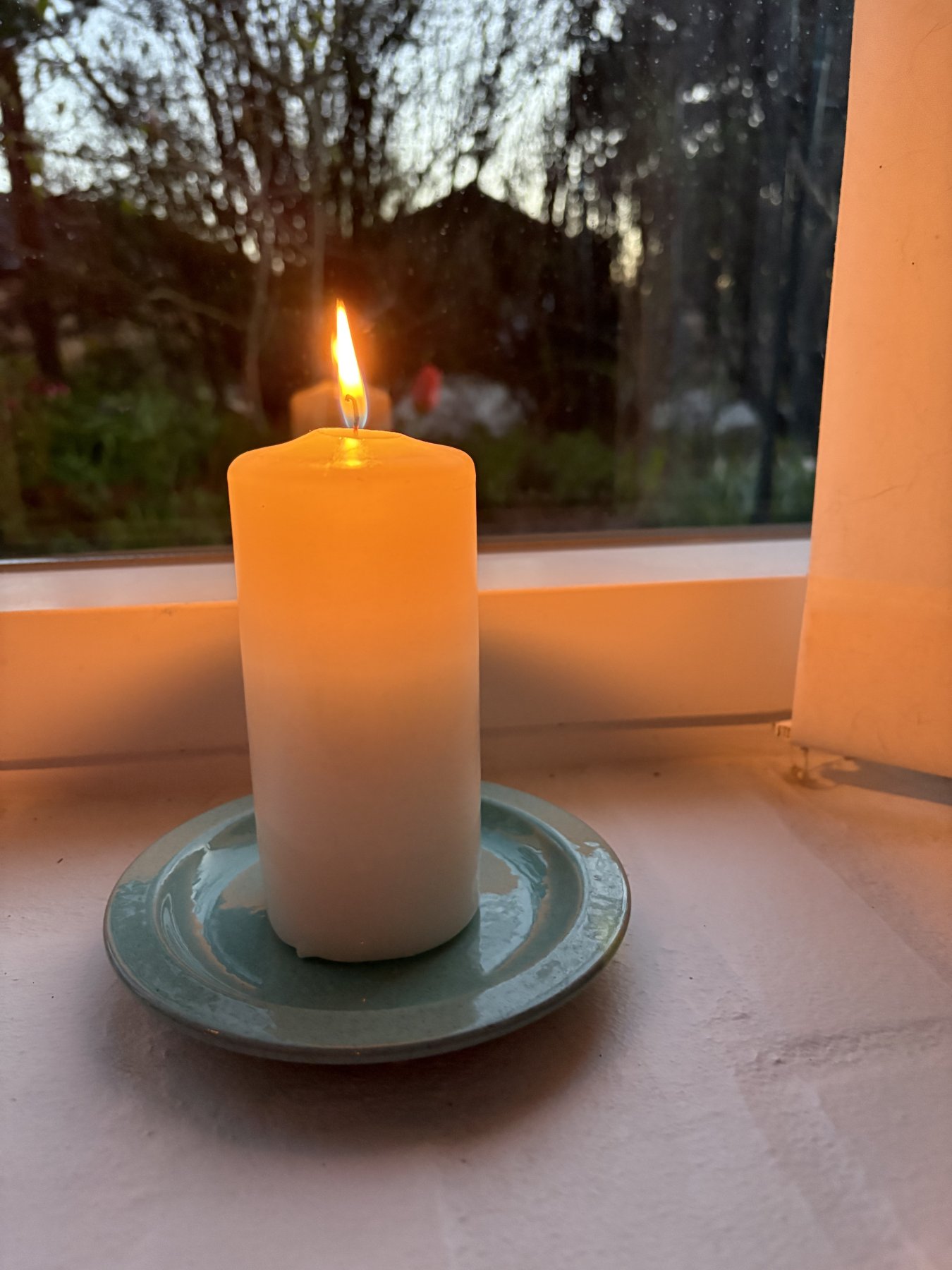
When the sun sets over Denmark on the evening of May 4th, people place a candle in their window. It's a sign everyone understands, a sign that connects the entire country.
It's a sign that the blackout has ended. That light is allowed to shine again.
This year, this nationwide tradition led me to Strandby Church for an evening that blended the boundary between historical remembrance and personal identity in a way I hadn't expected.
What we experienced in the church was a classic Alsang evening. It's about nothing less than the simple, powerful experience of community through music. But this evening had a very clear focus: every single song in the program told of a momentous upheaval.
It was about the moment when winter yields to spring and, at the same time, war gives way to peace. In Denmark, these two events are inseparably intertwined through May 1945. When you sing songs like "En lærke letted" or "Se det summer af sol," you feel this double awakening. It's the depiction of a world that turns from one second to the next: yesterday there was still the confinement and darkness of winter and war, and suddenly everything is light and new beginning.
These songs are not museum pieces; they transport the feeling of what it's like when a heavy burden falls away and life takes hold again.
The Rytmiske Kor guided us through these moods, from the first question about hope ("Du spør mig om håbet") to the great spring imagery. It was a musical preparation for what had to come. Because no matter how bright the singing was, it needed the anchor of reality to unfold its full meaning.
The transition from music to history came almost abruptly: The singing fell silent and the church was filled with a sound that everyone here recognizes immediately: the static crackle of an old radio broadcast. It was the "Freedom Message." The original BBC recording from the evening of May 4th, 1945. In that moment, the music became the backdrop for naked historical truth. You heard the rustling of manuscripts, the speaker Johannes G. Sørensen's brief pause, and finally the words: "I dette øjeblik meddeles det..." (In this moment it is announced...).
It's the acoustic threshold of this evening. While we had just sung about the soaring lark, this voice brought us directly back to the moment when freedom became certainty. It was the moment when remembrance of the dead and celebration of life met face to face.
When the voice from the speaker fell silent, a silence remained that was almost physically tangible. In this moment of reflection, I became fully aware of the historical dimension of our gathering. I looked into the faces of the people in the church pews and saw neighbors, colleagues, and friends.
But the recording had placed an uncomfortable truth in the room: Eighty-one years ago, we would have met in this context as enemies. That we sit here today, singing the same songs together and celebrating the same freedom, is not a given. It's the result of a profound reconciliation that has grown over decades. Feeling that the world has grown together so much that old lines of conflict no longer matter was the most moving moment of the evening for me.
Immediately after this historical caesura, we sang one of the evening's most important songs: "I Danmark er jeg født" (In Denmark I am born) in Sebastian's version. It's a song that unfolds enormous power when an entire congregation joins in. As I sang along with the lines, the words about mother tongue and fatherland, I felt a deep, honest longing within me: I wished it had truly been so. That this language was my mother tongue and this country my first home.
In that moment, the feeling of belonging merged with the bittersweet awareness that sometimes you have to laboriously, but all the more consciously, work to earn your homeland later in life.
Following the singing, the pastor greeted us. He found words that drew a line from history to today. He spoke of how we would later go home and place candles in the windows, a tradition that goes far beyond the decorative. It's an active remembrance that we must do everything to ensure we are "not put back into darkness." This theme ran through the rest of the program. Songs like "Lyset bliver natteblåt" and the closing evening hymn "Du som har tændt" reinforced this feeling of security and warmth. It was a collective promise to preserve the light—in both a figurative and literal sense.
The ceremonial part ended as it always does in Denmark: with community and good food. We moved from the church to the community center, where the atmosphere immediately became more relaxed.
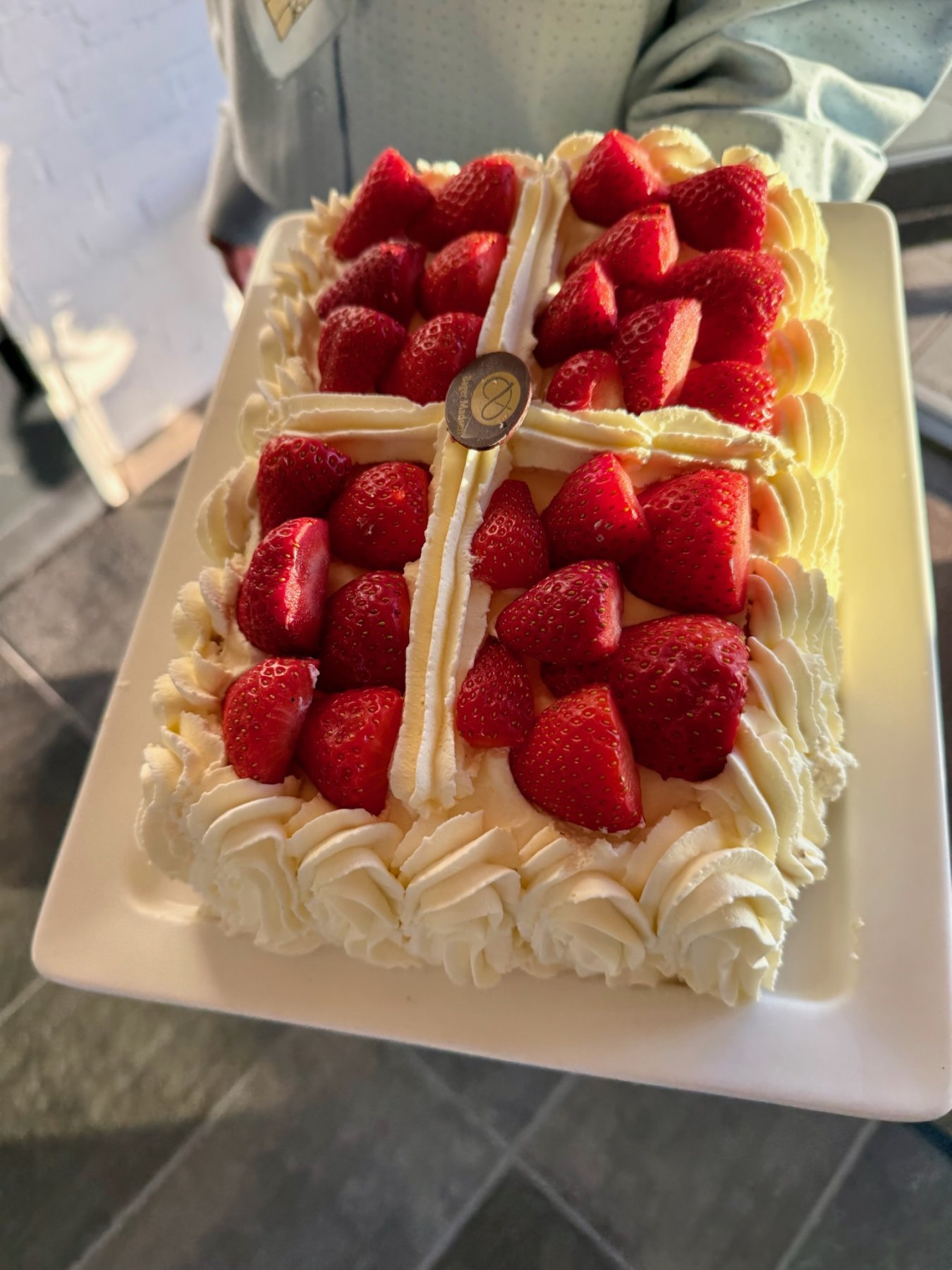
There, the traditional Dannebrogslagkage awaited us. At the long tables, over coffee and this red-and-white cake, something took place that you might call "practical reconciliation." We sat there as a choir, as a congregation, as neighbors. In the conversations, it no longer mattered where anyone came from or what happened 81 years ago.
This transition from heavy remembrance in the church to the carefree "hygge" in the community center shows what makes Denmark so special: you honor the dead and history with great seriousness, but you celebrate life and freedom immediately afterward with the greatest joy. Whoever shares bread—in this case, cake—with you is a stranger no longer.
Tonight, candles burn in the windows of Strandby, Elling, and all of Denmark. And in one of these windows, a light burns that has taken on a completely new meaning for me today. A light for remembrance, for freedom, for friendship, and for the knowledge that I have arrived at the right place.