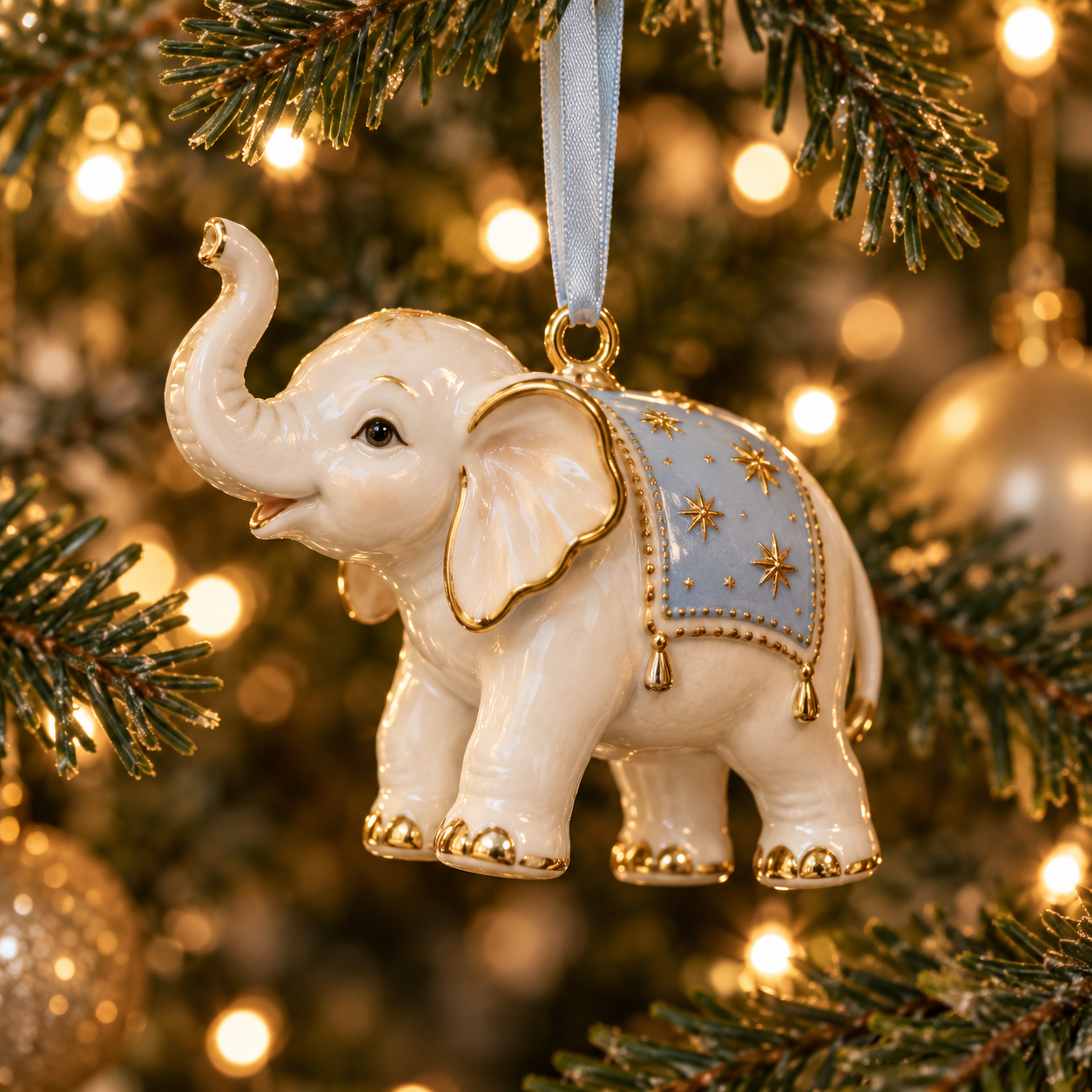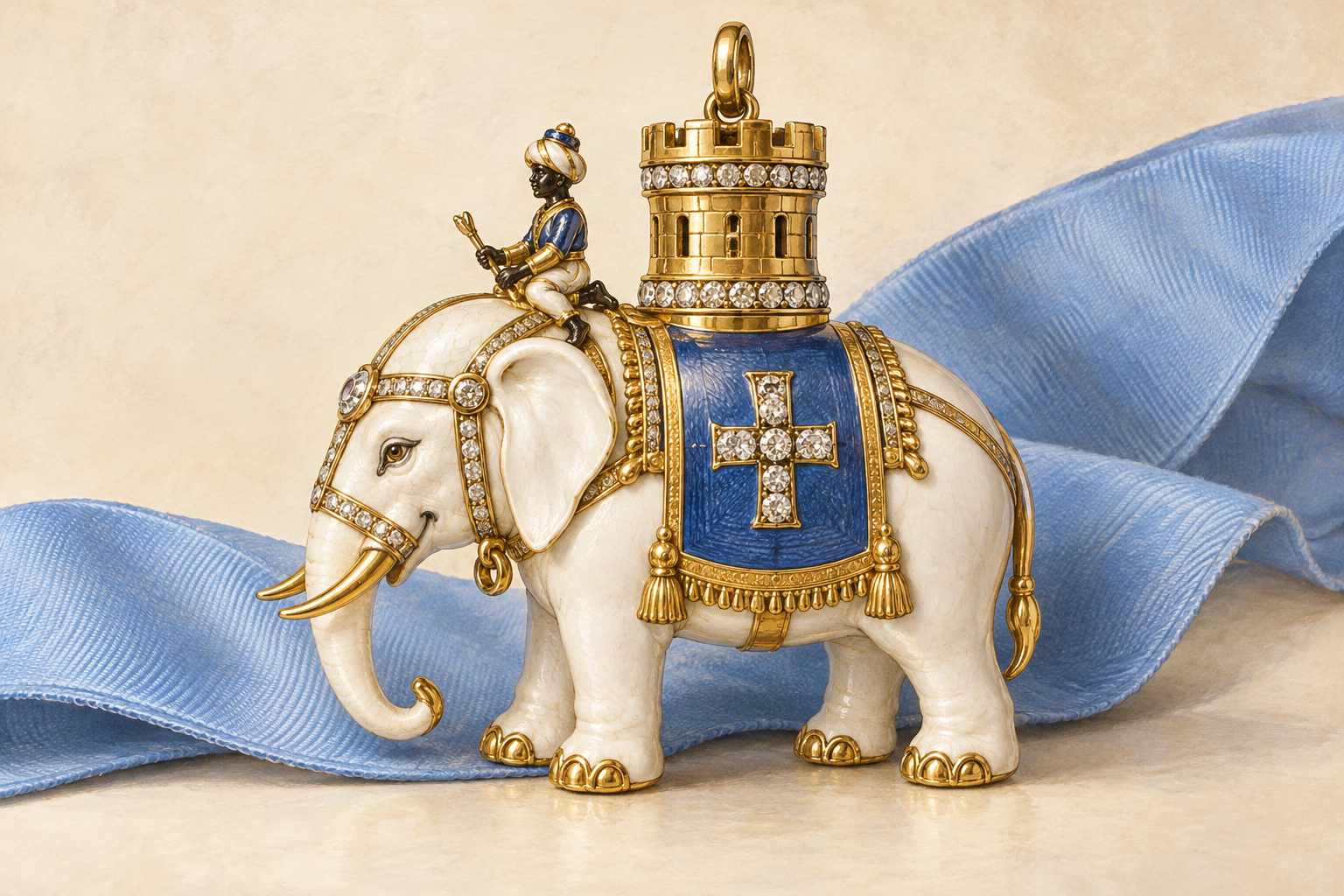
My favorite animal is the elephant. Actually, for as long as I can remember. For me, it's not just an impressive and intelligent animal, but also a good luck charm. If I remember correctly, according to Indian belief, an elephant always looks out toward the light. Then, so the saying goes, it brings good fortune to whoever owns it.
Perhaps that's why the elephant on Denmark's highest and oldest royal order of knighthood particularly piqued my curiosity: the Order of the Elephant. Because elephants really don't belong to Danish wildlife. In Denmark, you only encounter them in the zoo, not in the wild. So how did an animal from distant lands come to receive this royal honor?
The question led me into a world of medieval animal tales, Christian symbolism, and royal tradition. And one thing became clear: there is much we know. And some things that sound wonderful, but are not historically proven because of it.
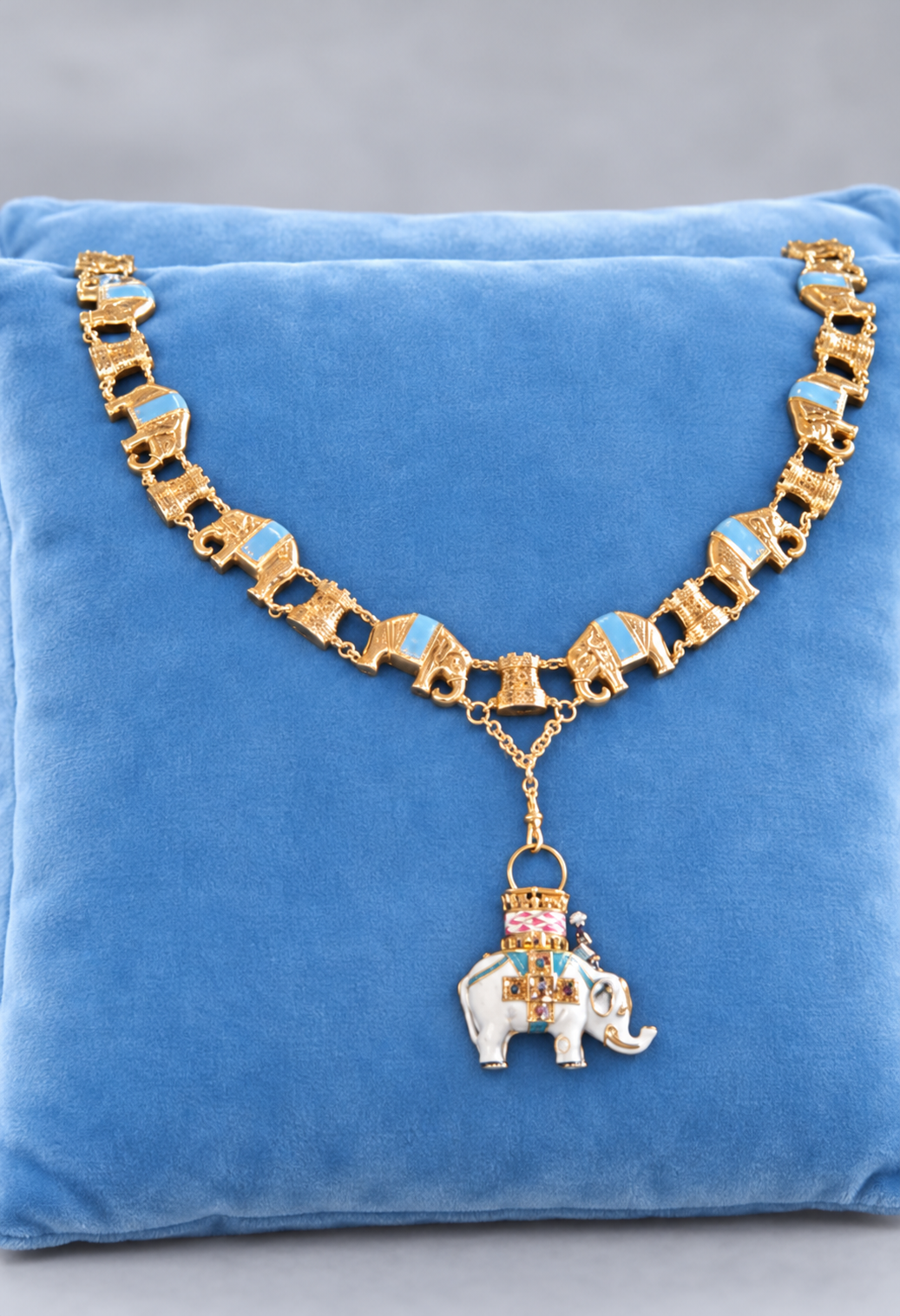
The little elephant is in any case a remarkable piece of jewelry: made of gold, white enamel, decorated with diamonds. On its back it carries a tower, in front of it sits an elephant keeper. The order is awarded mainly to royal personalities and heads of state. The tower and the keeper identify the animal as a war elephant—an image whose roots reach back to antiquity.
However, its Danish history begins in a decidedly religious setting.
Around 1460, Christian I founded the community "Guds Moders Selskab," the Society of the Mother of God. Because Denmark was Catholic at that time. The order insignia showed Mary with the Christ Child on a medallion, worn on a chain of tower-bearing elephants.
This detail is important: Mary did not sit on an elephant. As appealing as the idea of a Queen of Heaven on an exotic throne might be, the royal house's description doesn't support it. Mary formed the center of the medallion, the elephants belonged to the chain.
But why did elephants fit into a Christian order chain at all?
In the Middle Ages, people read animals somewhat like picture books of faith. Their actual or supposed characteristics could tell something about virtue, sin, and redemption. Natural observation and religious interpretation merged together. The elephant stood, among other things, for chastity and purity; the Danish royal house also describes a connection between the tower-bearing elephant and the Virgin Mary.
I find a story from medieval bestiaries, the animal books of the time, particularly striking. People believed elephants had no knee joints and therefore had to lean against a tree to sleep. If they fell, they couldn't get up again on their own.
In the narrative, a small elephant eventually manages to lift the fallen large one back up. This small helper was understood as Christ, who redeemed fallen humanity. The Getty Museum explains this interpretation using medieval depictions.
Zoologically, of course, this is nonsense. As an image for help, redemption, and the power of the seemingly small, however, it is remarkably memorable. And suddenly the elephant doesn't seem so strange in a religious context at all.
Whether this particular story led to the choice of the Danish order animal, we don't know. However, it makes it understandable why an elephant could appear as a fitting religious symbol in medieval thinking. But we cannot derive a personal reason from Christian I for his choice.
Then came the Reformation. From 1536 onward, the Catholic-influenced order fell into disuse. In 1580, Frederik II revived it, now with the tower-bearing elephant itself as the order insignia. This maintained a visible connection to the older community, while the Mary medallion disappeared. The elephant could also be interpreted Protestantically as an image for God's strong fortress.
The tower was therefore not a later invention to replace Mary on the animal's back. It already belonged to the elephants of the original chain.
In 1693, Christian V finally gave the order its first written statutes and binding rules for the design of the order insignia. The frequently cited year thus marks an important step in its development, not the beginning of its history.
And now back to my original question: why an elephant of all things?
The royal house addresses this quite remarkably: Neither the statutes nor the other available material provide a clear explanation for the original choice. Different interpretations are therefore easily possible. To speak of a documented scientific controversy would be premature, but so would turning a particularly beautiful explanation into certainty.
For me, it's precisely this open space that makes the order interesting. We can trace its development and understand its images better, and yet something remains open that we shouldn't simply fill with a good story.
When I discover a depiction of the white elephant somewhere in the future, I'll probably think of this little detour through history. And of the small elephant that lifts a large one back on its feet.
So there is no clear answer. But perhaps that's exactly fitting: The elephant carries its place in the Danish order to this day with a mixture of history, symbolism, and a little mystery.