Buying a house in Denmark works completely differently than in Germany. The market is faster, more transparent, and the emotional attachment to property is less; you buy for your current life stage, not forever.
1. Step: The Financial Foundation
- Equity is the magic word: That's your "entry ticket". Danish banks won't give you a mortgage, and a German bank won't support you either, because they won't have access to the property if things go wrong.
- So take a close look at how much house you can actually afford.
2. Step: The Search (Boligsiden & Boliga) In Denmark, there are no secrets when buying a house. All the data is out in the open.
- The portals: Use Boligsiden.dk or Boliga.dk. Both show you everything: The liggetid (how long has it been on the market?), the prisudvikling (price history) and the actual sale prices in the neighborhood.
- Helårsbolig: Make sure you're searching for year-round homes. In places like Skagen, bopælspligt (residence requirement) often applies. The house must be occupied - perfect for you as an expat.
3. Step: Your Most Important Partner (The Lawyer) This is the point where you shouldn't cut corners.
- No neutral notary: Denmark doesn't have the German notary system.
- The real estate agent (Ejendomsmægler) only represents the seller. He's your legal opponent.
- The attorney: You need your own lawyer (preferably German-speaking).
- He's your shield. He reviews the contracts, the reports and makes sure you don't get taken advantage of as a layperson.
- The budget: In Germany you pay up to 6.5% transfer tax. In Denmark, this tax doesn't exist. Invest part of these savings (about €1,000 - €2,000) in a top-notch lawyer.
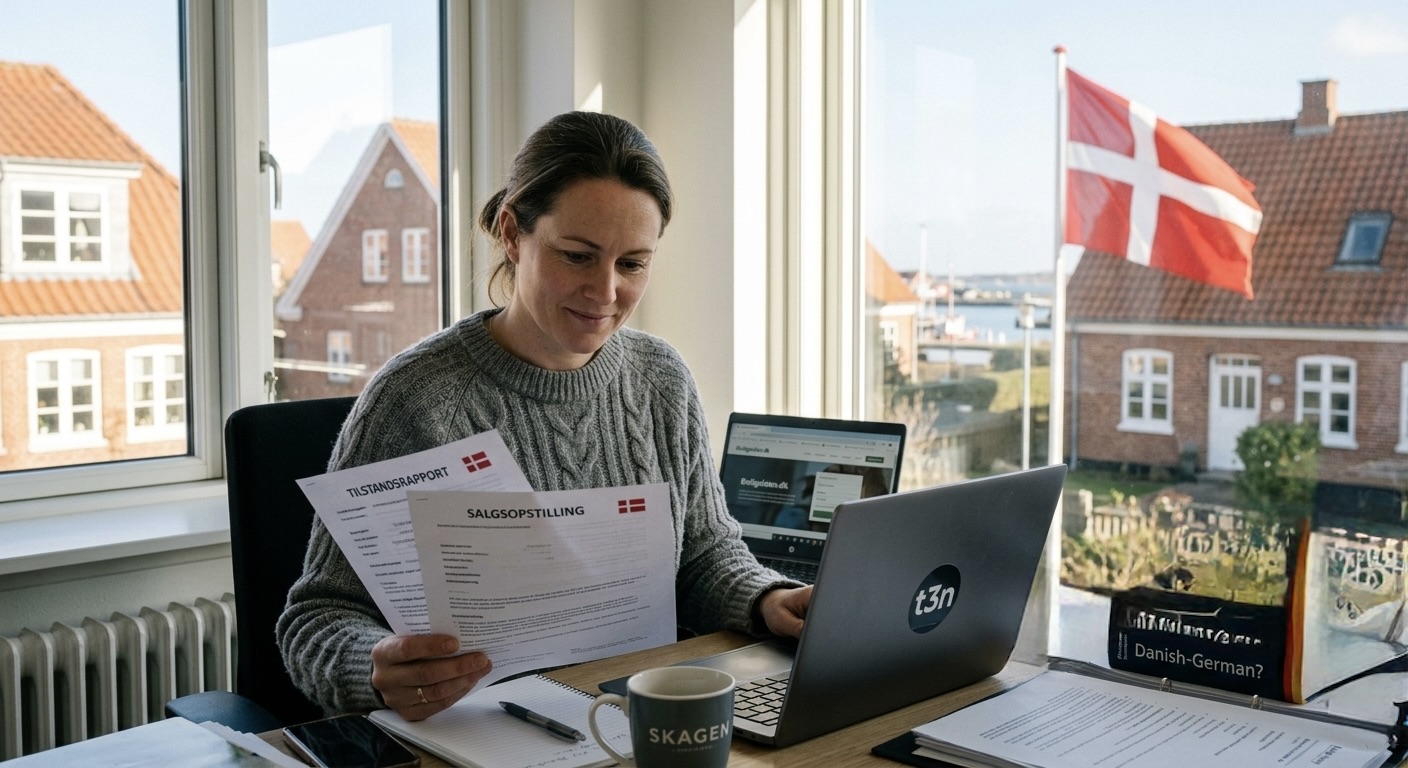
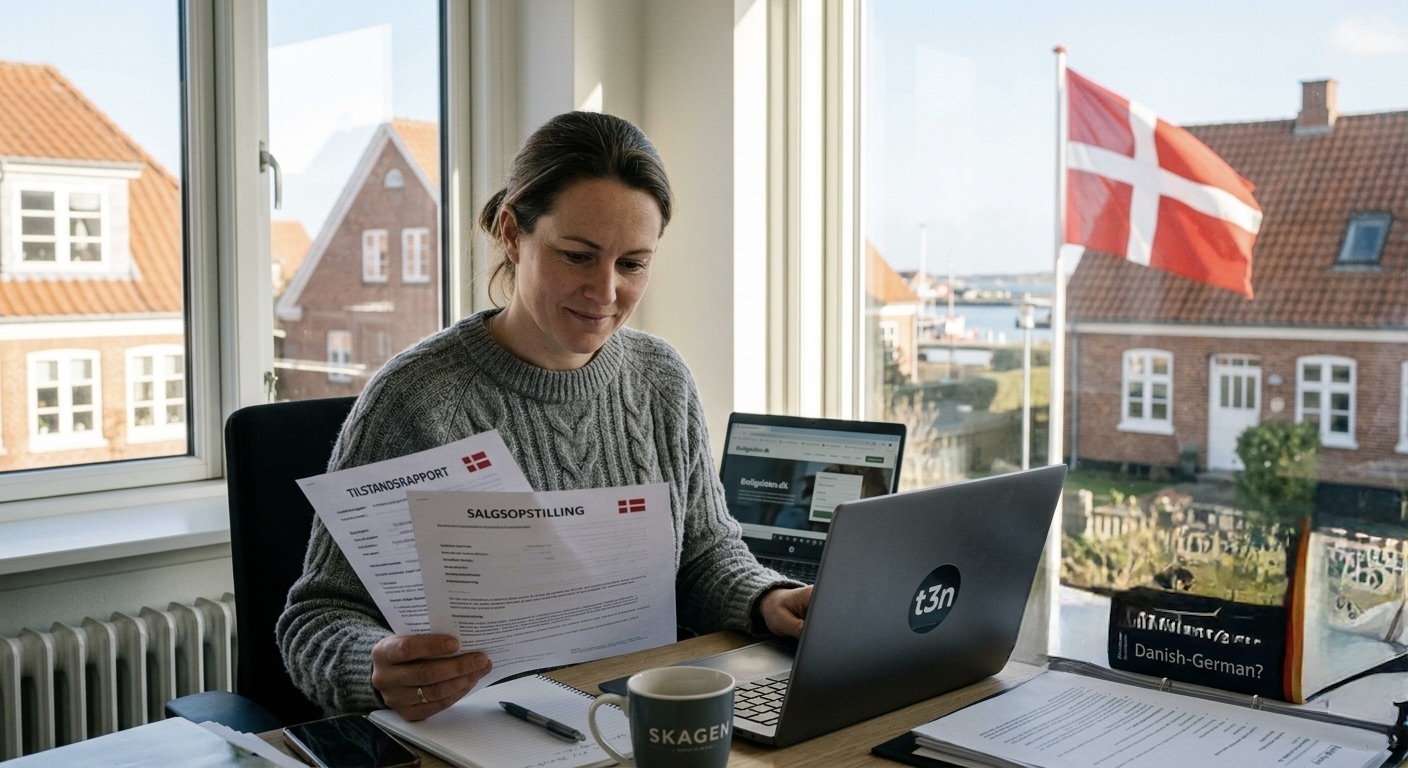
4. Step: Request & Review Documents When a house catches your interest, you request the complete documents from the agent (Salgsopstilling & reports). Your lawyer reviews these before you buy, but of course you can view the property without the reports:
- Tilstandsrapport: The independent inspection report on the property's condition (K1, K2, K3).
- Elinstallationsrapport: The electrical inspection.
- Energimærke: The energy efficiency rating.
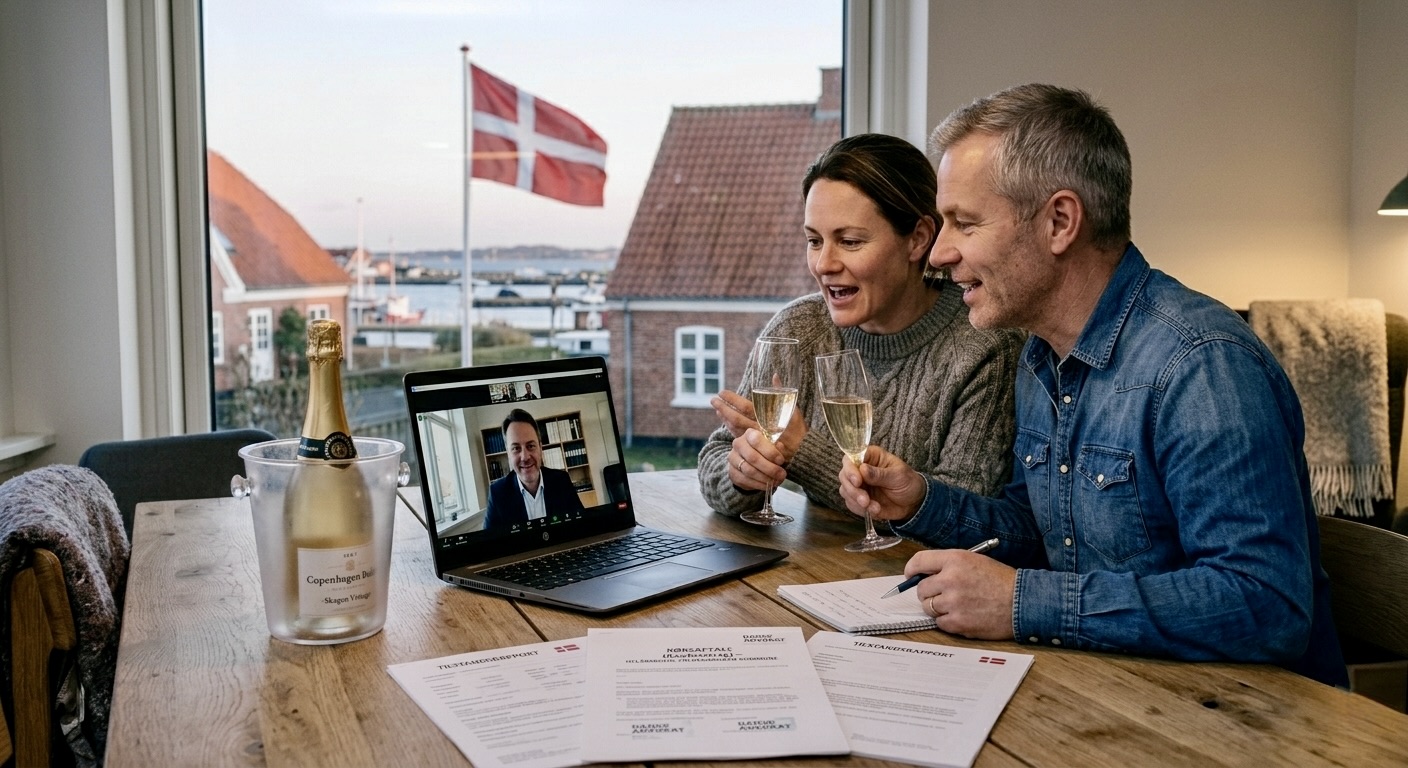
5. Step: Signature with Safety Net (Advokatforbehold) Danish agents often put pressure on you. So you can secure the house without taking any risk, there's the Advokatforbehold (lawyer's caveat).
- You sign the purchase contract, but have this clause added: "The purchase is subject to the approval of my lawyer in its entirety."
- Your lawyer then usually has 3 to 5 business days to stop the contract or renegotiate if he finds any pitfalls.
6. Step: The Insurance (Ejerskifteforsikring) The Ejerskifteforsikring protects you against hidden defects that didn't appear in any report.
- The seller must pay half the premium for the basic insurance.
- Your lawyer will advise you whether the standard or extended version makes sense for your house. Or whether you can skip it altogether.
7. Step: The Costs (What Really Adds Up) You save the transfer tax, but the state isn't entirely free. Factor in these costs:
- Tinglysningsafgift (land registration fee): This costs a fixed 1,850 DKK plus 0.6% of the purchase price
- Lawyer's fee: A flat rate for the entire transaction.
Don't let the agent lull you just because he's nice; he works for the other side. And above all, don't let him pressure you just because a property has been waiting 238 days for a new owner – that doesn't mean there are 5 other interested buyers lined up!
Use the money you save on transfer tax for a German-speaking lawyer. He can be your insurance policy when buying a house. Only when he gives the green light does that house in the north truly become a worry-free home!