Varme Hveder - History and Tradition of a Danish Pastry
Sometimes there's a special aroma in the air: cardamom, freshly baked dough, and warm butter. This scent belongs to "Varme Hveder," a traditional Danish pastry deeply rooted in history, religion, and social customs. Especially around Store Bededag—the Great Prayer Day—these simple yet special wheat rolls play an important role.
The Origin: Store Bededag
The most well-known tradition surrounding hveder is connected to Store Bededag, which falls on the fourth Friday after Easter.
In earlier times, this day was a very strict religious holiday. Work was forbidden—even bakers weren't allowed to heat their ovens. The idea behind this was that truly everyone, including servants and craftspeople, should have time to pray and reflect.
So that people would still have bread for the holiday, bakers found a practical solution: they baked larger wheat rolls—the so-called hveder—on Thursday evening. These rolls were deliberately baked so they could be easily sliced and toasted the next day. This way, people could enjoy them warm on the holiday, even though no bakery was open.
Until today, this has developed into a beloved tradition. In many Danish households, Varme Hveder are enjoyed on Thursday evening before Store Bededag, usually freshly toasted and generously spread with salted butter.
An Older Tradition: Hveder at the Funeral Feast
Less known, but historically equally widespread, is the role of hveder at Begravelseskaffe—the traditional coffee table following a funeral.
At the classic Danish coffee buffet, there was once a simple rule: before sweet pastries were served, one should first eat something substantial.
This is where hveder came in. With their simple form, mild flavor, and salted butter, they were perfect for this solemn occasion. They symbolized a certain groundedness, peace, and modesty.
Especially in North Jutland and Vendsyssel, such customs often persisted longer than in the big cities. The traditional sequence usually looked like this:
First, toasted hveder or simple white rolls with butter were served, often accompanied by cheese or cold cuts.
Only then came the sweet pastries, like kringel or cream cakes.
What Makes Hveder So Special?
At first glance, hveder look like ordinary rolls. In fact, however, they possess some very typical characteristics.
Cardamom—The Heart of the FlavorThe most important spice is cardamom. A true hvede has a distinct aroma of this aromatic spice, which gives the pastry its warm, slightly exotic flavor.
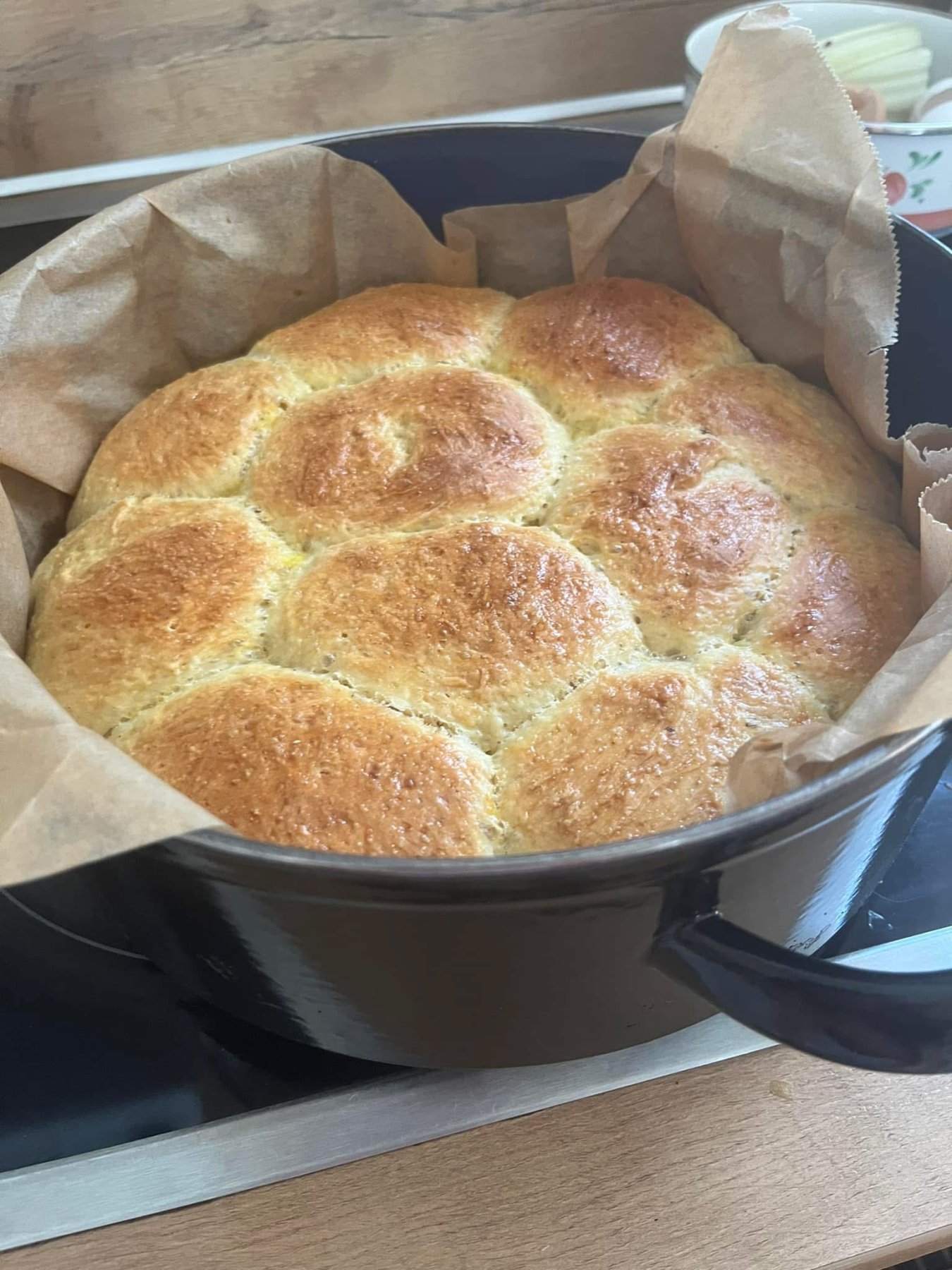
The Special Baking MethodThe rolls are baked very close together. This prevents a crust from forming on the sides. After baking, they're pulled apart, creating their typical slightly square shape with soft sides.
The ToastingIt's only through slicing and toasting that hveder reveal their special character. The surface becomes crispy while the inside remains soft. When you then spread it with salted butter, it melts into the warm crumb—a simple but unmistakable pleasure.
A Piece of Living Culture
Varme Hveder are more than just a pastry. They tell of religious traditions, old social customs, and the Danish ability to make a cozy tradition out of simple things.
Whether on the evening before Store Bededag, at the coffee table, or simply fresh from the toaster with butter—hveder are a small piece of Danish everyday culture that lives on to this day.
Here is the recipe for "Varme hveder," first in Danish and then also in German for printing
Total Time 5 hours Working Time 30 min Shelf Life 2 days
Ingredients 2 dl milk, room temperature 20 g yeast 2 eggs 1 tbsp sugar 450 g wheat flour 1 tsp salt 2 tsp ground cardamom 100 g butter, room temperature 1 egg, beaten for brushing
Instructions Stir yeast in a bowl with room temperature milk, then stir eggs and sugar into the milk. Mix flour, salt, and cardamom well together in a clean bowl and crumble in butter until an even fine crumbly mixture forms. Now knead the two mixtures together—preferably with a mixer—until the dough becomes smooth, soft, and lovely. Place dough in a bowl and let it rise for 2 hours on the kitchen counter, covered with a clean cloth.
Take the dough out onto a floured surface, divide it, and form round buns. Place them close together, with about 1 cm spacing between them, on a small baking sheet with parchment paper. Cover with a clean kitchen towel and let them rise for another 2 hours on a warm kitchen counter. Brush the buns with beaten egg and bake them in a preheated oven at 175 degrees convection heat for 16-18 minutes until they are golden and cooked through.
Slice down the middle, toast the hveder, and enjoy them spread with ice-cold butter.