It's the same every year.
Towards the end of the holiday season, posts pile up in the relevant groups, forums and social media from German holidaymakers in Denmark who, after two weeks of vacation between the North Sea, hot dogs and sunsets, suddenly realize:
We're moving here!
Denmark is so beautiful. The people are so relaxed. Everything is cleaner, quieter, friendlier and just so much better overall.
You've fallen in love.
That's somehow very human. Vacation, after all, has the pleasant characteristic that you don't have to go to work in the morning and you don't get the bill for the holiday home's heating until later.
But this year was different.
Around the time of the state elections in Saxony-Anhalt, the desire to turn one's back on Germany as quickly as possible seemed to increase considerably.
And what I found particularly striking was who suddenly wanted to move to Denmark.
On one side, there were those for whom even the prospect of a strong election result for the AfD was apparently reason enough to think about fleeing Germany.
And on the other side, those who declared that precisely because of an AfD success, they now finally wanted to leave Germany and move to Denmark.
Last Sunday, the AfD actually became the strongest force in Saxony-Anhalt with 43.8 percent. However, it did not achieve an absolute majority in the state parliament.
And while people in Germany are now passionately arguing about what this result means, watching it sometimes creates the impression that for some Germans there is only one political topic left:
the AfD.
Some are preoccupied with it because they see it as Germany's downfall.
Others are preoccupied with it because they believe only this party can still save Germany.
And somewhere in between, there should actually still be an entire country.
Germany, by the way, consists of more than one party.
And of course you're allowed to be concerned about political developments.
Of course you can discuss how Germany is governed, how migration should be organized, how internal security can be maintained, or why events today are sometimes protected with heavy concrete bollards that weren't needed there a few decades ago.
You're allowed to name these changes.
You're allowed to criticize them too.
What bothers me more and more, however, is this willingness to constantly throw an entire country and its population into political color buckets.
Gray. Red. Green. Brown.
Whoever mentions certain problems gets put in a corner.
Whoever mentions other problems ends up in the next one.
And whoever eventually gets tired of this permanent camp mentality simply declares:
Then I'll just move to Denmark.
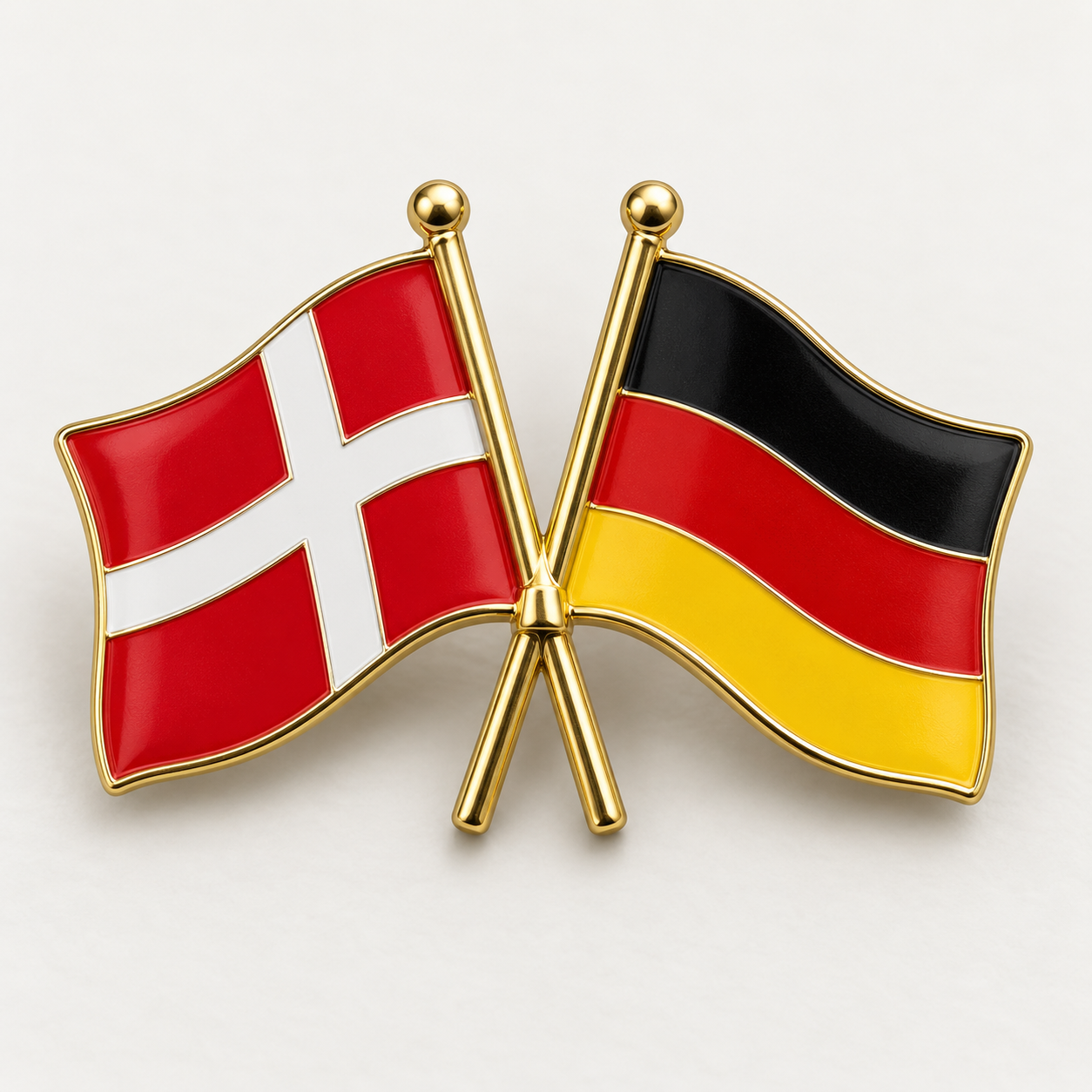
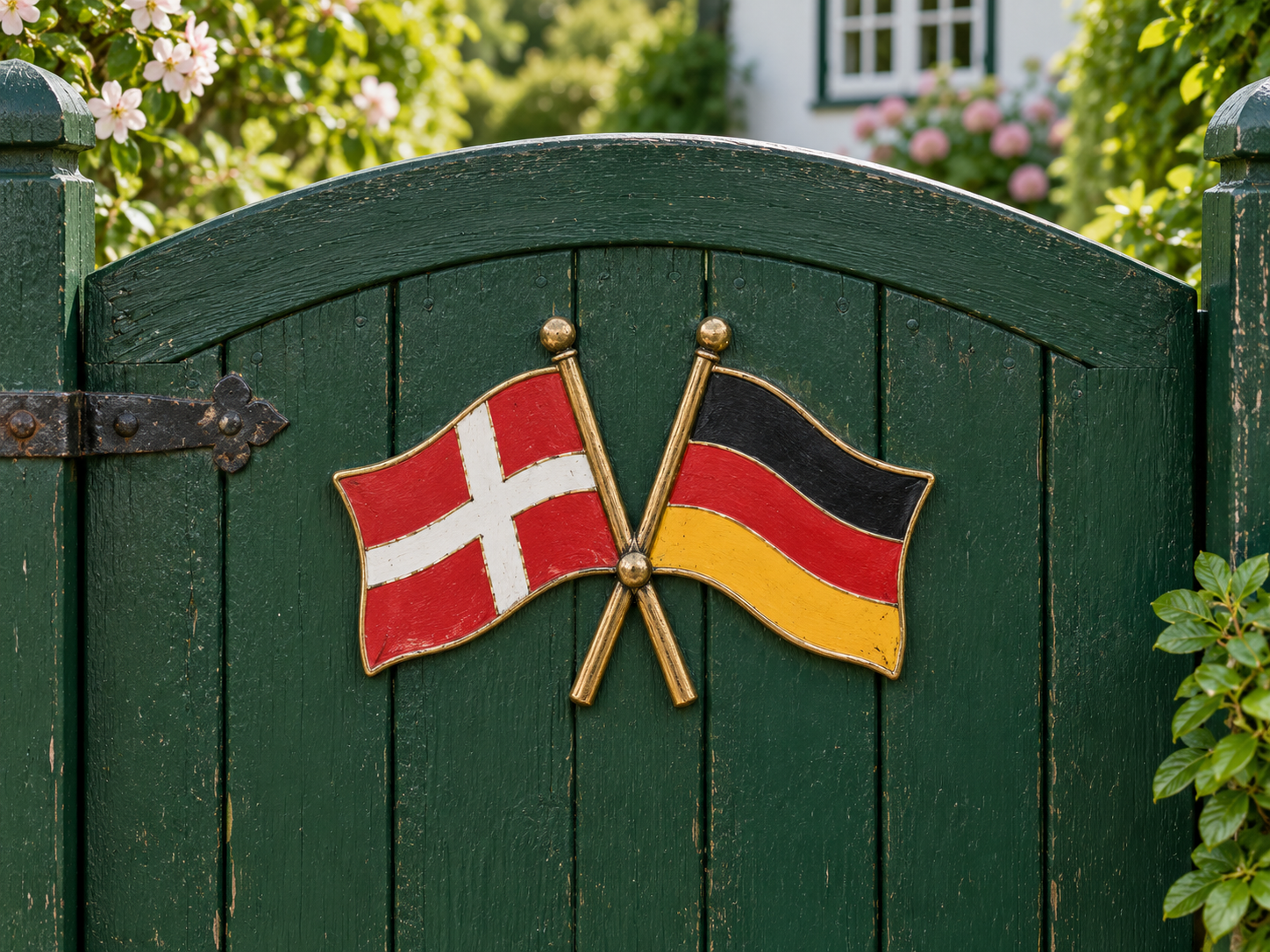
With flags flying, so to speak.
But:
Which flag, exactly?
The German one?
That would be the next interesting discussion.
Because while the Danish flag is of course seen here on birthdays, in front of houses, at festivals and on all sorts of occasions, a German waving their own national flag outside of a football tournament quickly gets the feeling they need to provide a political explanation first.
So when emigrating, maybe you just pack the Dannebrog along?
Unfortunately, it's not that simple.
Because before you grab a new flag, it might be quite helpful to know what country you actually want to move to.
Denmark is not better Germany
That's possibly the biggest misconception of many German Denmark fans.
Denmark is not Germany with prettier beaches, less bureaucracy and happier people.
Denmark is a different country.
With its own history.
With its own culture.
With its own language.
And with its own political stance.
Especially on the subject of immigration, many a German would-be emigrant would probably rub their eyes in astonishment if they looked into it more closely.
Danish politics has pursued a comparatively strict course in migration and integration policy for years. And this is by no means exclusively the concern of a small party at the far right.
Even Danish Social Democrats explicitly support the goal of controlling immigration, returning rejected asylum seekers more consistently, and making it easier to deport criminal foreigners. The government is also continuing to work on models for reception and departure centers outside Europe.
Anyone used to German politics should perhaps read this sentence again:
We're talking about Social Democrats.
Not about a Danish AfD.
That's precisely one of the essential differences.
Certain political positions that in Germany are immediately assigned to a specific political camp run along completely different lines in Denmark.
Denmark has developed a relatively broad political consensus over the years that a welfare state can only function if migration remains manageable and integration is actually required.
You can think that's right.
But you can also think it's wrong.
But anyone who wants to move to Denmark should at least know that this is how it is.
Welcome doesn't mean: just keep doing what you're doing
Of course Germans can move to Denmark.
As citizens of the European Union, they enjoy freedom of movement rights. Anyone who meets the relevant requirements can live and work here.
But you shouldn't deduce from this the idea that Denmark is eagerly waiting for every German who happens to be dissatisfied with their home country.
Because immigration doesn't mean:
I'm moving to Denmark because I'm no longer happy with Germany, and Denmark should now please function exactly as I imagine.
Anyone who wants to live here should rather eventually ask themselves the reverse question:
What can I do to belong here?
That includes the language.
And yes, Danish is harder than being able to say "Hej," "Tak," and "to øl" after three vacations.
That includes getting to know social customs.
That includes not constantly using Germany as a benchmark.
That includes only thinking Danish culture is great when it means hygge, candles and cinnamon rolls.
And that eventually also includes accepting that the Danes shape their own country.
Politically too.
There's one more little surprise waiting for German emigrants here.
When a German moves to Denmark, they don't just get to vote in the next parliamentary election to decide what government this country gets.
To vote for the Folketing, the Danish Parliament, you need Danish citizenship.
As a German EU citizen, on the other hand, you can vote in municipal and regional elections in Denmark and, under the applicable conditions, also participate in the European elections.
That's actually quite an interesting setup.
You can move to Denmark because you don't like the political developments in Germany and then discover that you don't even get a say in your new country's national politics.
And maybe there's even a quite healthy message in that:
First, arrive.
Observe.
Listen.
Learn the language.
Understand the country.
And don't declare after four weeks what the Danes should do differently.
Because Denmark is Denmark
Maybe that's exactly where something lies that many Germans like about this country without knowing why.
Denmark has a relatively relaxed relationship with itself.
The Dannebrog doesn't automatically stand for a political stance.
It belongs to the country.
You can like your country without approving of every decision its government makes.
You can talk about migration without rejecting every immigrant.
You can welcome immigrants and at the same time expect that people who want to live here permanently make an effort with language, work, social participation and integration.
And you can be outstandingly friendly to foreigners and still say:
This is Denmark.
Maybe that's exactly the kind of composure Germany could use right now.
Not always running away immediately.
Not sorting every person by their political color.
Not proclaiming the downfall of Western civilization at every election.
And above all, not believing that political paradise awaits beyond the next border.
Because of course you're allowed to emigrate to Denmark.
You're allowed to fall in love with this country.
After all, we did it ourselves.
But you shouldn't come to Denmark to run away from Germany.
You should come to Denmark because you want to live in Denmark.
That's a pretty big difference.
And before you cross the border with flags flying, you should probably actually check what flag you're holding in your hand.