MobilePay is more than just an app in Denmark. It's everyday life.
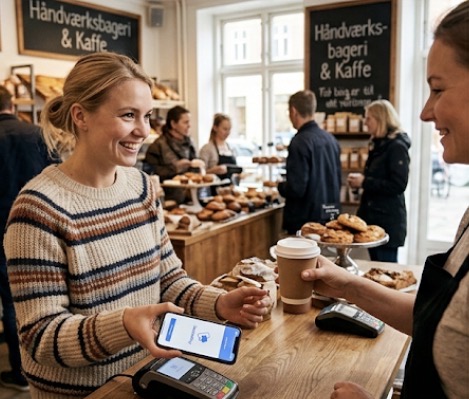
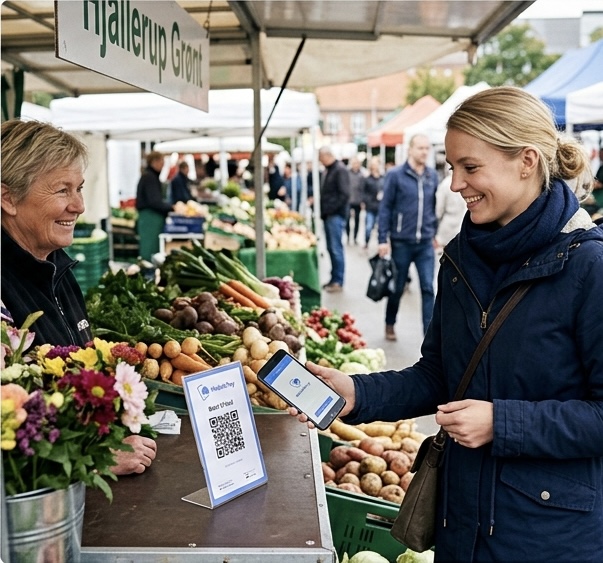
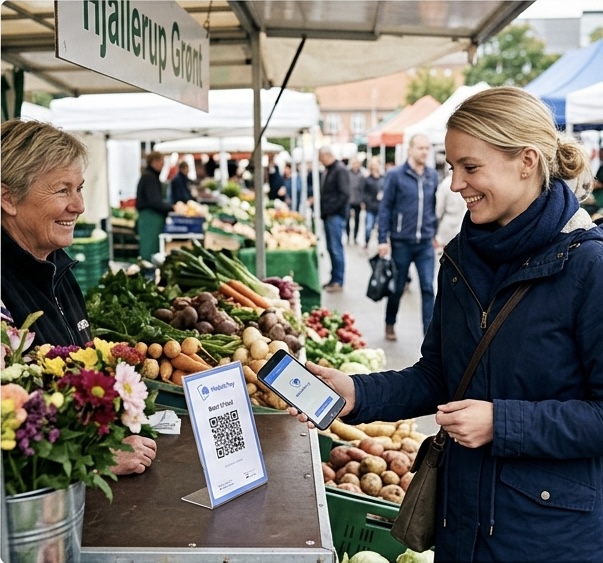
You go to the bakery, buy fish at the harbor, pick up strawberries at a roadside stand, or get something from neighbors. Nobody asks for cash. Nobody fumbles for loose change.
Instead, you hear a sentence constantly here:
"Jeg sender det på MobilePay."
Enter a phone number, confirm the amount, done. No IBAN, no waiting, no hassle.
It's standard in private life too. You bought something for someone? Organized a shared meal? Paid for a round of beers?
Boom, money is on its way. In seconds.
Why MobilePay works so well:
The big advantage is radical simplicity: • Payment by phone number • Money arrives with the recipient immediately • No sharing of account details • No "I'll transfer it to you later"
It's so fast that it doesn't even feel like "paying" anymore.
And that's exactly why MobilePay has become practically ubiquitous in Denmark: • Small shops • Market stalls • Clubs and associations • Private individuals
You can really say: If there's no card reader somewhere, there's almost always MobilePay.
Setting it up itself is no problem at all: • Download the app • Enter your phone number • Confirm with MitID • Link your bank account • Set a PIN
Childishly easy. It takes maybe five minutes.
Done.
At least in theory.
But everything has its catch: You have to be part of the system
MobilePay is not an open system like PayPal. It's completely integrated with the Danish system.
And that means concretely:
You don't just need: • A phone number • A Danish account • MitID + CPR number
Most importantly, you need:
👉 An official residence in Denmark (Folkeregister)
And that's exactly where many people fail.
Typical case: You own a summer house in Denmark, but you're not registered there
A classic example: • House or Flexbolig in Denmark • Several months on-site each year • Danish bank account in place • MitID in place • Even contracts for electricity, water, etc.
Everything seems "Danish."
But:
👉 Your primary residence is still registered in Germany.
And that alone is enough for MobilePay to unfortunately not work.
Why the system is so strict:
MobilePay checks your CPR number status in the background.
If you're not officially listed in the Danish civil registry, your access is considered incomplete.
This isn't a technical barrier—it's a deliberate decision.
Denmark ties such services directly to: • Identity • Tax structure • Residence
That makes the system extremely secure and reliable, but also closed.
So for summer house owners, unfortunately: No residence, no MobilePay
- Without a Danish residence, there's no functioning MobilePay use -
No matter how many other requirements you meet.
What does that mean in everyday life?
For many foreigners or second-home owners, this is really frustrating—it's almost a slap in the face to your expectations.
Because:
You're there You live there part-time You have an account You have MitID
And yet you're still left out.
But how do you deal with it?
The good news: You manage anyway.
1. Use your card
In most cases: • Debit card • Credit card • Apple Pay or Google Pay
Many places that offer MobilePay also accept cards.
2. Pay through others
This is completely normal in Denmark: • Friends or neighbors pay via MobilePay • You transfer them the amount
This happens daily and is absolutely socially acceptable.
3. Use alternatives • Classic bank transfer • In rare cases, cash
MobilePay is one of the best and most secure payment systems available right now.
Fast, uncomplicated, and perfectly integrated into everyday life.
But:
It only works for those who are truly part of the Danish system.
If you "only" live here part-time, you're left out.
And that's exactly what you should know before wondering why registration suddenly doesn't work.
Incidentally, I've heard that Germany has been introducing a similar payment system through various banks for several months now. I can't judge whether it will work or be as good as our system here in Denmark. But I think acceptance in Germany will initially be very low.