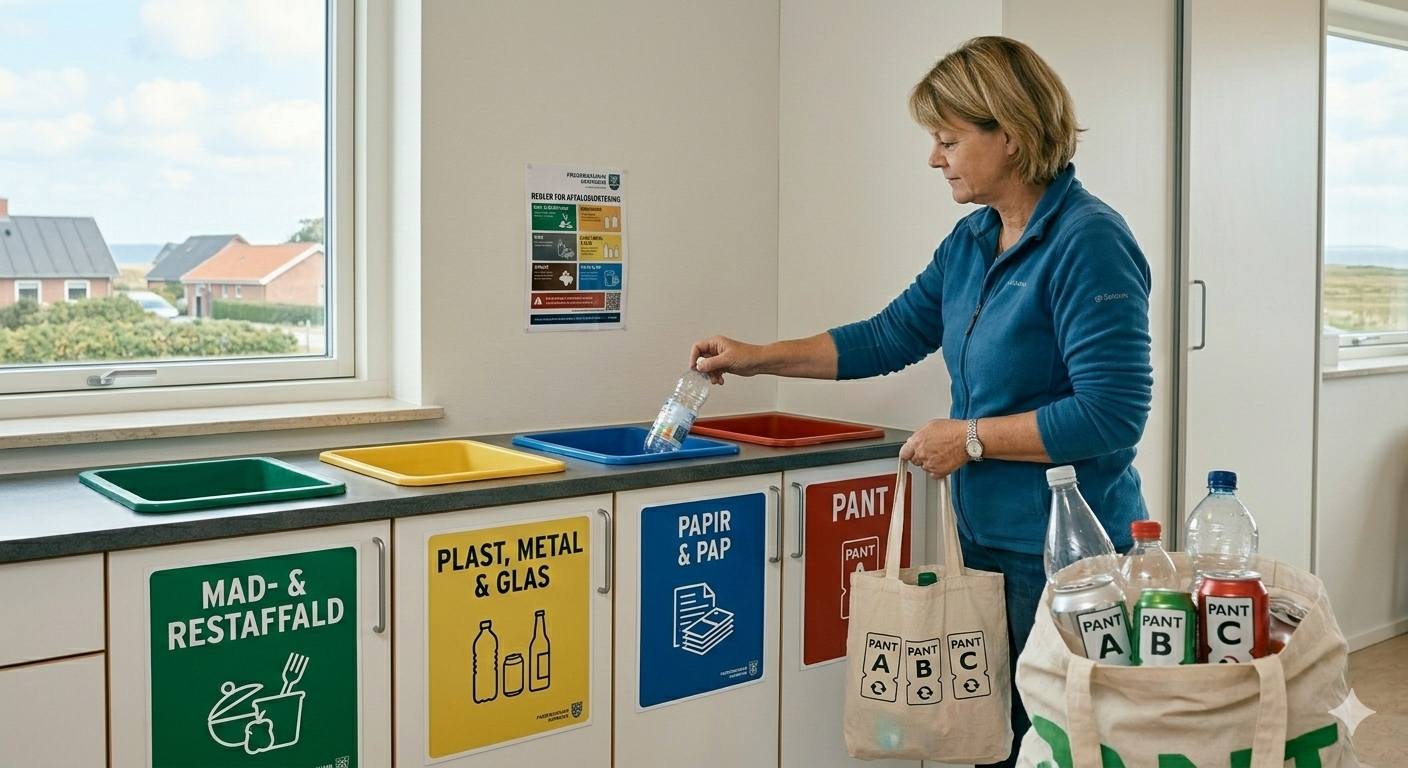
Trash & Deposit: Why Denmark Takes Cleanliness Seriously When you move to Denmark, you quickly realize: cleanliness isn't a suggestion here, it's a collective project. The Danish waste separation system and the famous "deposit" system are deeply rooted in everyday life. If you want to be part of it, you need to know the rules. Waste Separation: A Science of Its Own In most Danish municipalities, like here in Frederikshavn where I live, trash is sorted in incredibly detailed ways. It's not just about "bio" and "rest." Modern trash bins in front of houses often have compartments for:
- Papir & Pap (Paper and cardboard)
- Metal, Glas & Plast (often in one bin, but separated with high-tech at the facility)
- Mad- & Restaffald (Food scraps and actual residual waste)
- Tekstilaffald (Old clothes and textiles that can't be donated)
- The Insider Tip: Danes are very precise about this. If you don't rinse plastic packaging quickly before tossing it in the bin, you'll get a friendly (or less friendly) reminder pretty fast. The goal is "Genbrug" - real recycling.
- The "Deposit" System: Gold in the Bottle
- Denmark has one of the world's best deposit systems. You recognize it by the letters A, B, and C on bottles and cans.
- Pant A & B: Usually glass bottles or small plastic bottles.
- Pant C: Large plastic bottles and cans.
- You get your money back at the "bottle machine" (Flaskeautomat) in every supermarket. But be careful: In Denmark, it's completely normal not to just throw deposit bottles in the trash. When you're out and about with an empty can, you often place it next to the trash bin so bottle collectors can pick it up easily without rummaging through garbage. That's a form of social respect.
- The "Genbrugsplads": The Expat Highlight
- One thing you'll notice as an expat: the local recycling center (Genbrugsplads) is a place you'll actually enjoy visiting. They're incredibly well-organized, spotlessly clean, and the staff is usually extremely helpful. Whether it's old batteries, construction debris from renovations (you know, the whole home-buying thing...) or garden waste - everything has its proper place.
- Conclusion
- Waste separation and deposits are signs of decency in Denmark. When you've got your system down, you show that you've arrived in Danish everyday life. It's a small contribution to the bigger picture, and it's hugely appreciated here.