Let's continue our journey through Denmark with more fascinating travel destinations
II. West Coast & South Jutland
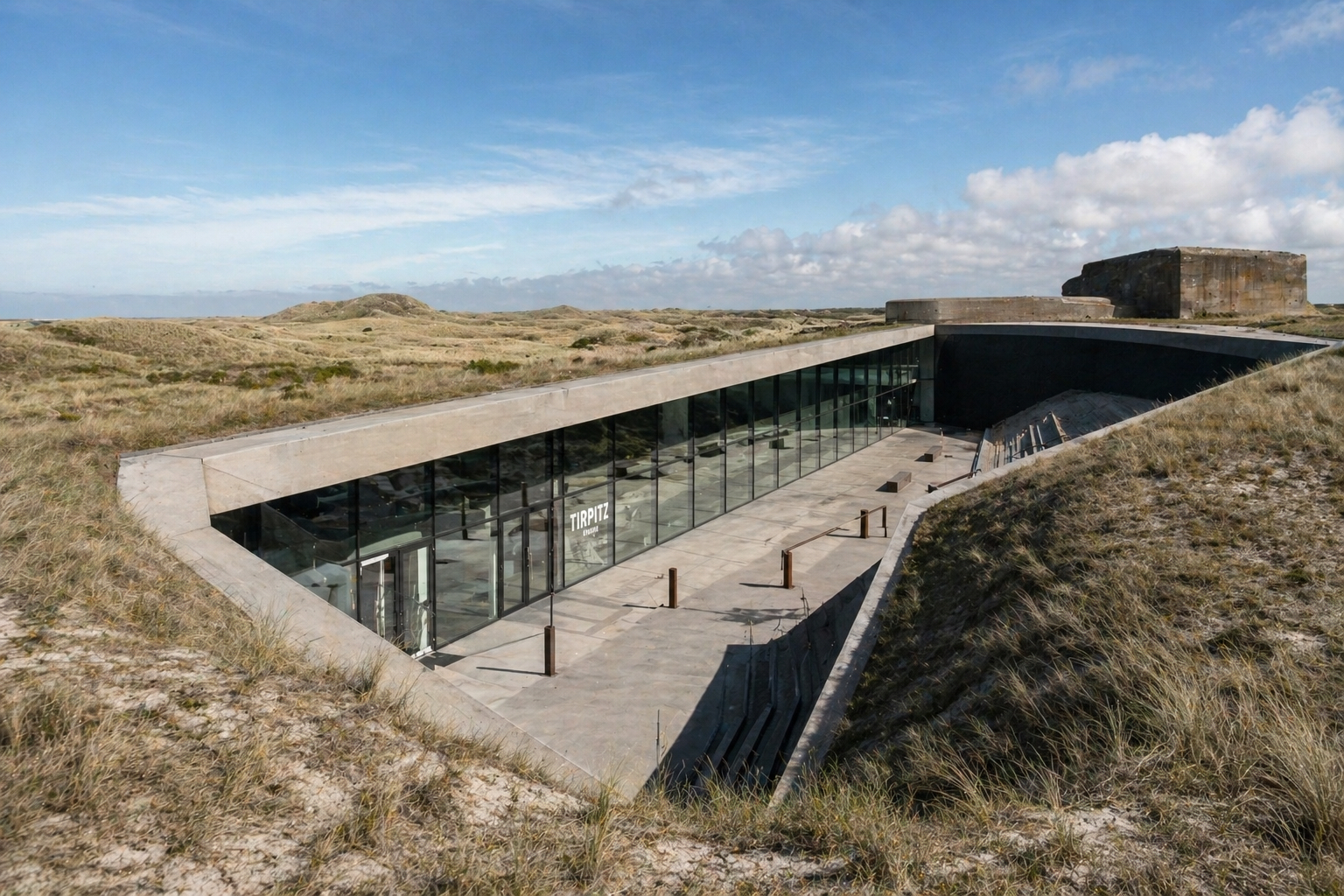
1. Tirpitz Museum (Blåvand): An "invisible" museum in the dunes.
2. Ribe Domkirke: Denmark's oldest cathedral with fascinating modern COBRA art.
3. Ribe VikingeCenter: A living Viking village based on scientific research.
4. Wadden Sea National Park: UNESCO World Heritage - perfect for oyster safaris or seal watching.
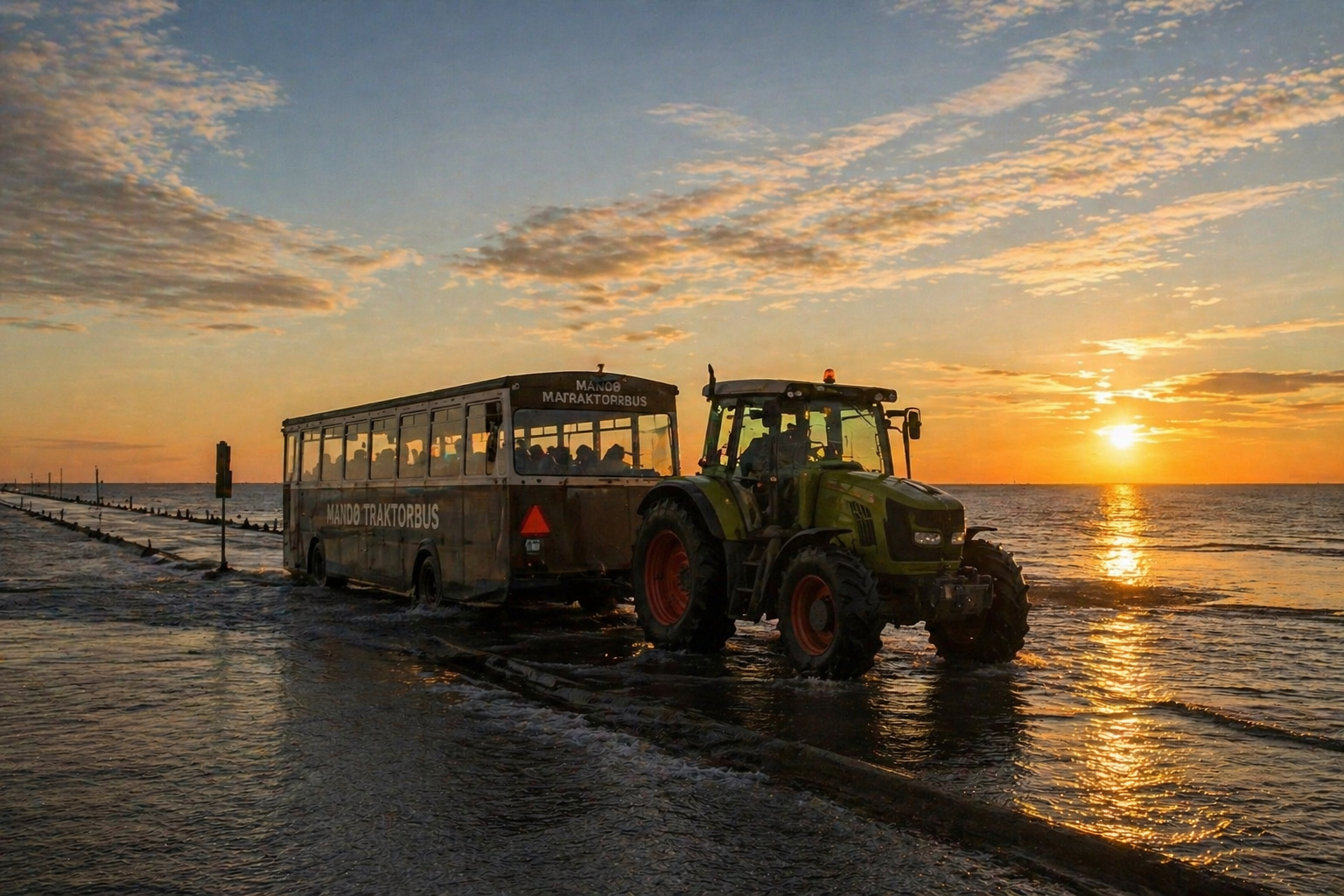
5. Mandø: The island you can only reach by tractor bus at low tide.
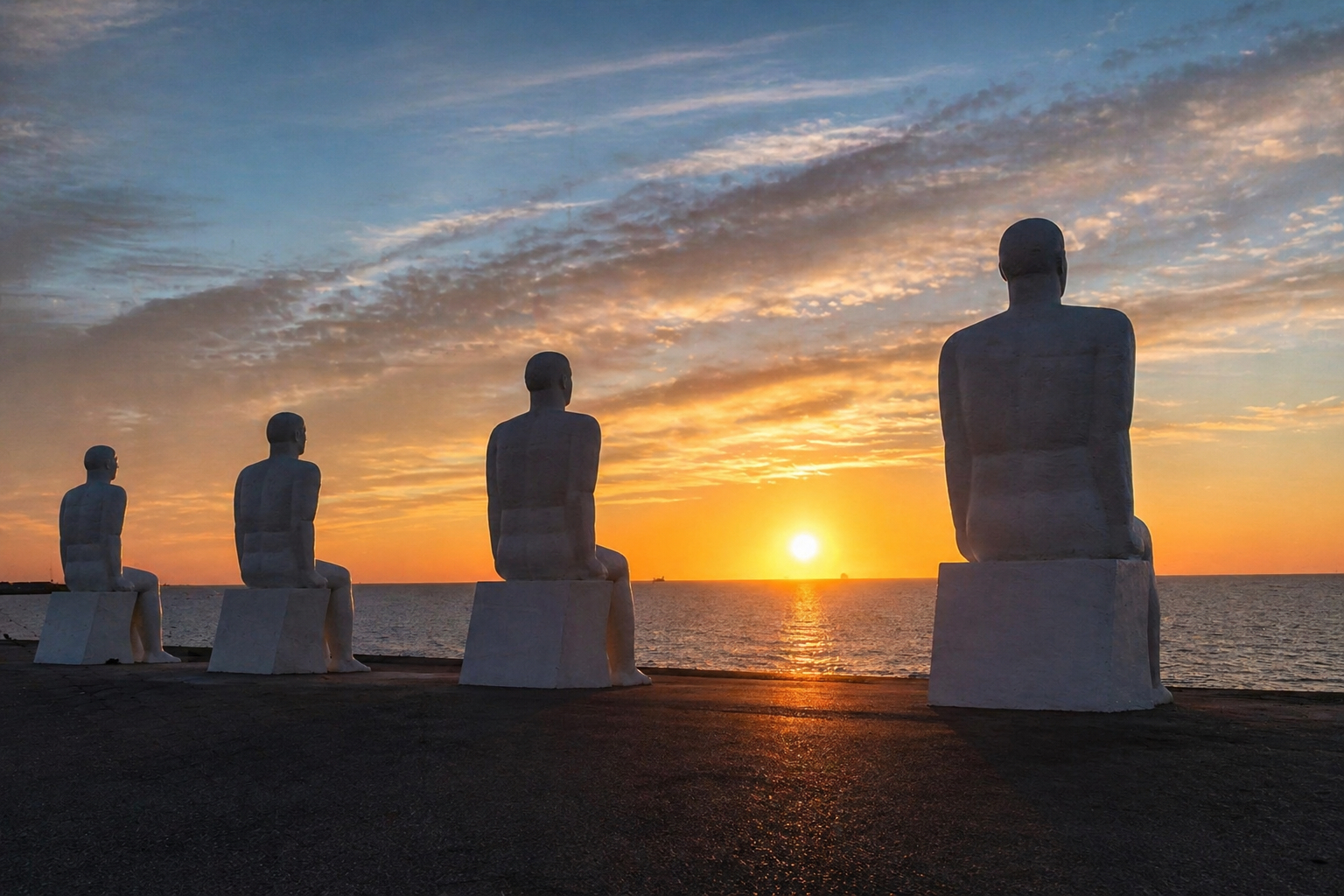
6. Mennesket ved Havet (Esbjerg): The four monumental "white men".
7. Fiskeri- og Søfartsmuseet (Esbjerg): Everything about the Danes' relationship with the North Sea.
8. Christiansfeld: The UNESCO city of the Moravian Brethren (and their honey cakes!).
9. Sonderburg Castle: History of the German-Danish border region right on the water.
10. Universe Science Park (Als): Where natural science becomes playfully experiential.
II. West Coast & South Jutland
1. Tirpitz Museum (Blåvand): Designed by the Bjarke Ingels Group, the museum is invisibly integrated into the dune landscape and connected to an old bunker. It features impressive exhibitions about the Atlantic Wall, amber, and regional history. The architecture uses daylight and concrete to create a unique atmosphere.
2. Ribe Domkirke: Denmark's only five-aisled church is a landmark of the country's oldest city. Inside, medieval architecture contrasts beautifully with modern, colorful glass art by artist Carl-Henning Pedersen. The climb up the Burgomaster's Tower is rewarded with sweeping views over the flat marshland.
3. Ribe VikingeCenter: In this vibrant open-air museum, the world of the Vikings is reconstructed and made tangible in meticulous detail. Craftspeople, warriors, and farmers demonstrate their daily tasks in authentically reconstructed longhouses. Visitors can actively participate and gain a deep understanding of early Danish history.
4. Wadden Sea National Park: This UNESCO World Natural Heritage site is one of the world's most important ecosystems and provides food for millions of migratory birds. At low tide, guided walks to the oyster banks or seal watching are possible. The dynamics of the tides shape the life and landscape of this fascinating region.
5. Mandø: This small island in the Wadden Sea is only accessible by vehicle at low tide via the so-called Låningsvej. A tractor bus safely brings visitors through the mud flats when the tide blocks the way. The island is a paradise for birdwatchers and those seeking absolute silence.
6. Mennesket ved Havet (Esbjerg): The four nine-meter-high concrete sculptures have gazed stoically over the North Sea since 1995. They symbolize the encounter of pure humanity with nature and have become Esbjerg's landmark. When arriving by ship at the harbor, the "White Men" are visible from far away.
7. Fiskeri- og Søfartsmuseet (Esbjerg): The museum documents the close connection between the Danish people and the sea. A large seal pool and aquariums showcase the wildlife of the North Sea in all its natural diversity. There are also exhibitions on the history of fishing and the offshore industry.
8. Christiansfeld: Founded in the 18th century by the Moravian Brethren, the city is known for its strictly geometric architecture. Since 2015, it has been a UNESCO World Heritage site and captivates with its peace and symmetry. A visit isn't complete until you've tried the famous local honey cakes.
9. Sonderburg Castle: The castle looks back on eight hundred years of history and was the site of important German-Danish conflicts. The museum inside features extensive collections on Schleswig's history and the war of 1864. Its location right on the water makes it one of South Jutland's most picturesque castles.
10. Universe Science Park (Als): This adventure park is all about natural sciences, technology, and the power of curiosity. Visitors can directly experience physical phenomena and experiment in digital worlds. It's a place where education and entertainment blend perfectly for all ages.