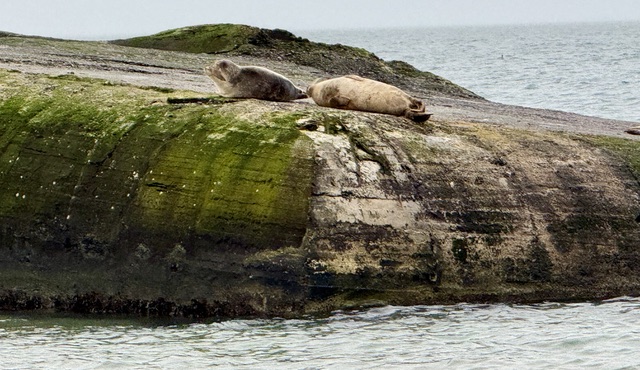
Seals are marine creatures. They hunt in the water, sleep in the water, spend most of their lives in the water.
And yet they give birth to their young on land. It sounds contradictory, but there are compelling biological reasons for it.
The first problem: Air Seal pups are mammals. They need to breathe immediately after birth. In the water, there's a risk that the newborn would drown before the breathing reflex and coordinated surfacing work reliably. Solid ground is therefore a survival requirement.
The second problem: Fur Grey seals are born with fluffy white birth fur, called lanugo. This fur is not water-repellent. It soaks up water like a sponge, and in the cold Danish waters, the pup would become dangerously hypothermic within a very short time.
Only after shedding this coat, about three to four weeks after birth, is the young seal ready for the sea.
The third problem: Time Seal milk is extremely energy-rich and contains up to 50 percent fat. The pup must build up an insulating layer of blubber in as short a time as possible. For this, it needs rest.
Stress from dogs or humans can cause the mother to stop nursing or abandon the pup altogether.
When is the season?
Danish waters are home to two main species with different birthing times. The harbour seal (Spættet sæl) gives birth to its young in June and July. The pups can swim relatively early, but they depend on sandbars and beaches as resting places.
The grey seal (Gråsæl) gives birth in November and December—precisely when the legal leash requirement on beaches is relaxed. The lanugo fur of the pups makes them especially vulnerable during this time.
The "Healer": A Misunderstanding with Consequences
Again and again, seal pups lie alone on the beach. In most cases, this is completely normal. The mother hunts in the water and returns to nurse.
To such a young seal, a dog—no matter how gentle it may be—is a potential enemy.
If a dog approaches the beach, the mother doesn't dare come ashore.
The pup waits, the mother keeps her distance, and after a few hours, what was a harmless walk has turned into a catastrophe.
The beach is not a playground for seals, but a refuge.
A dog on a leash means safety for a seal pup—the assurance that its mother will return to land for the next feeding.
What to keep in mind:
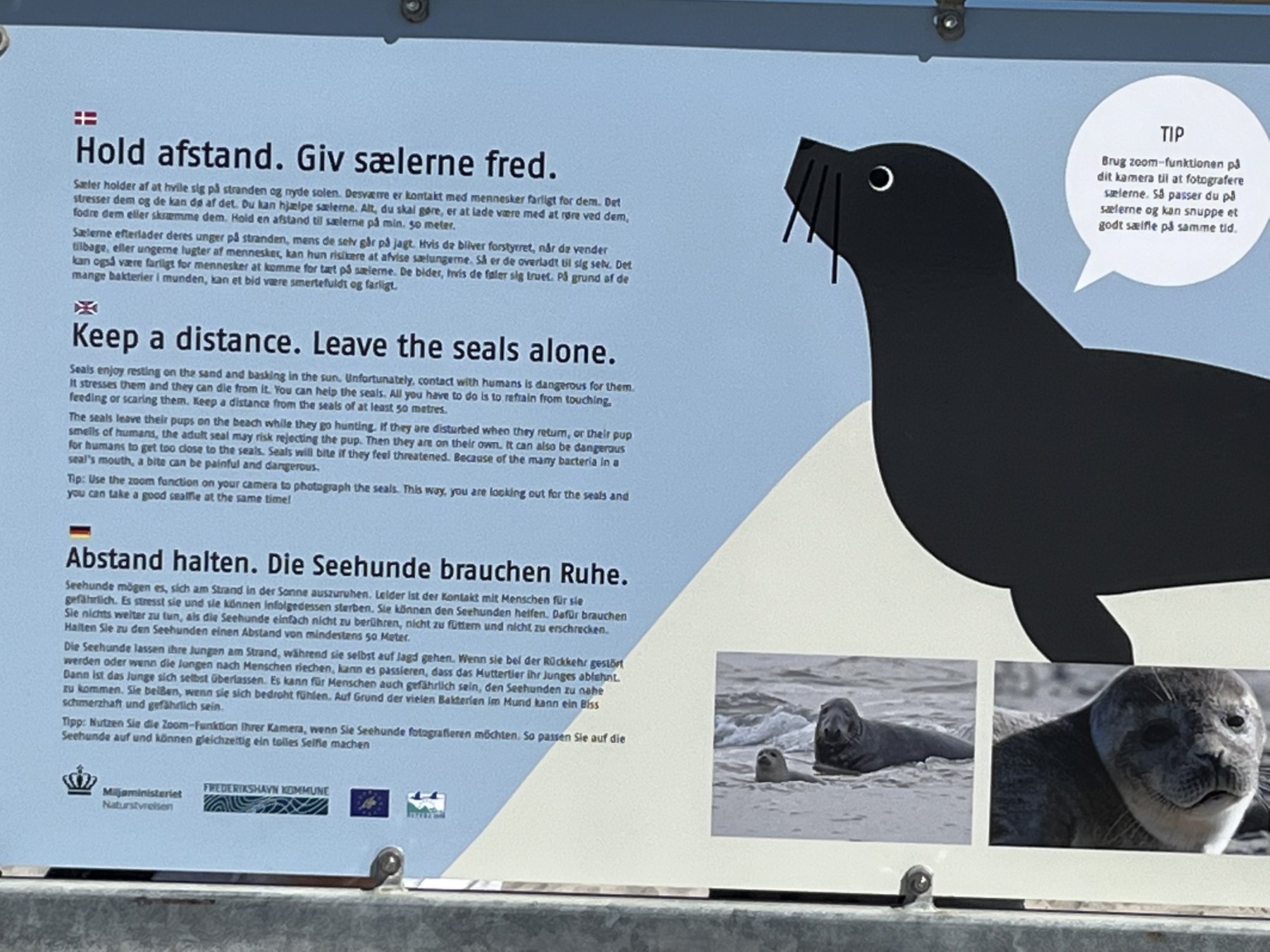
Anyone who discovers a seal pup lying alone on the beach should keep their distance—at least 50 meters, ideally 100 meters—keep their dog on a leash, and pass the spot quietly or take a wide detour around it.
Touching is off-limits, even if the animal appears injured.
Only if a pup is obviously injured or goes many hours without being cared for by its mother is it worth calling the relevant wildlife authority.