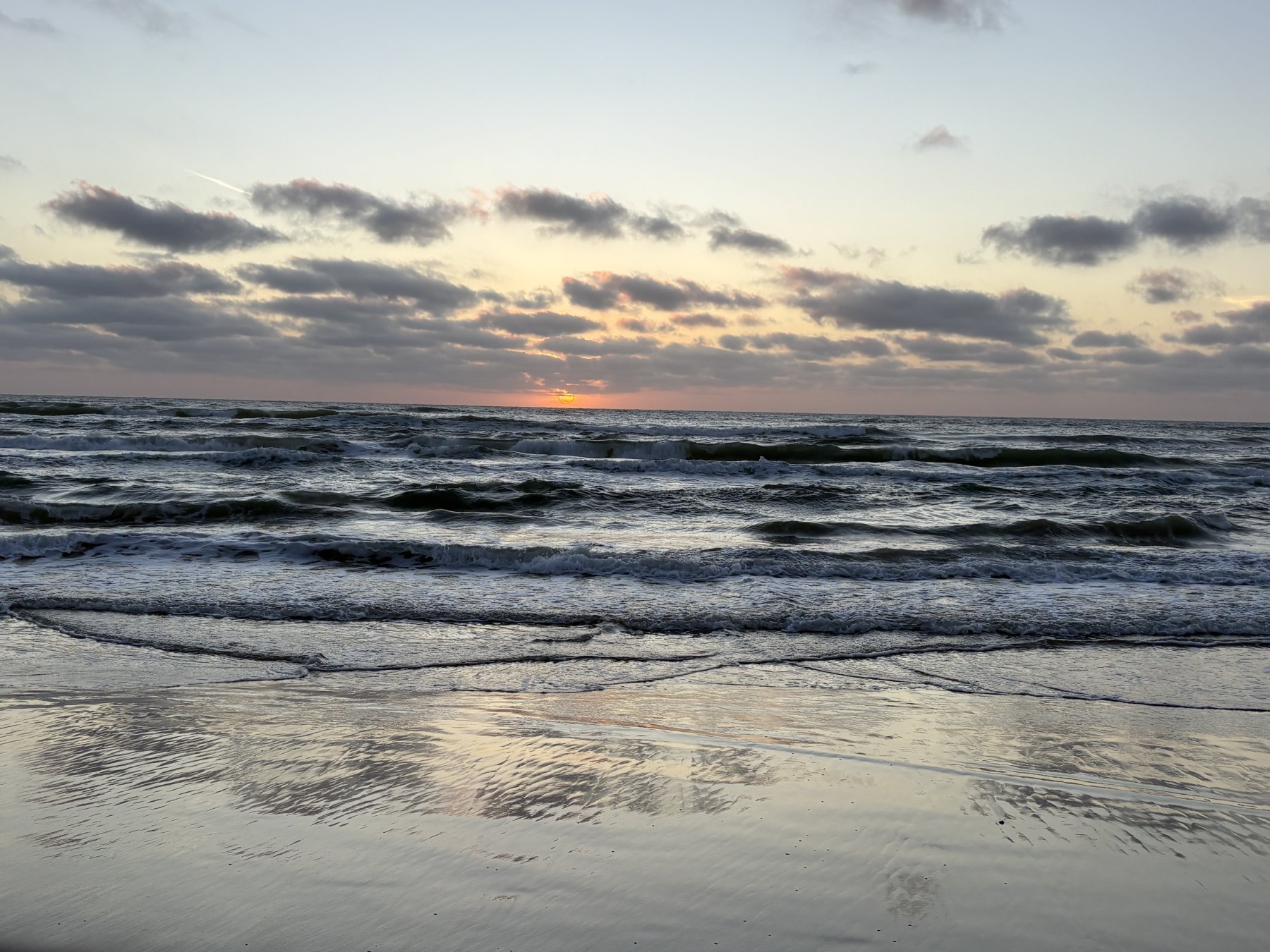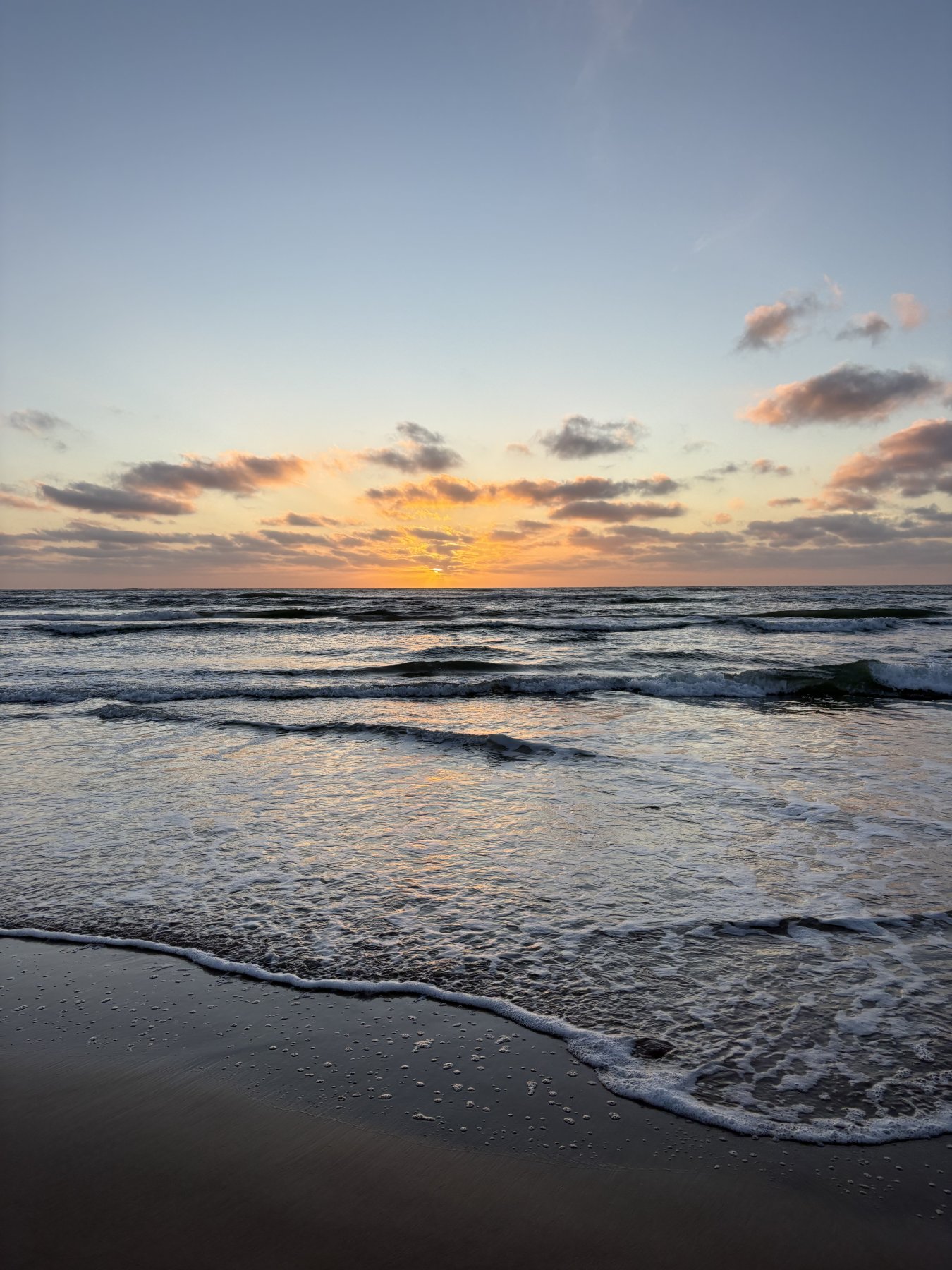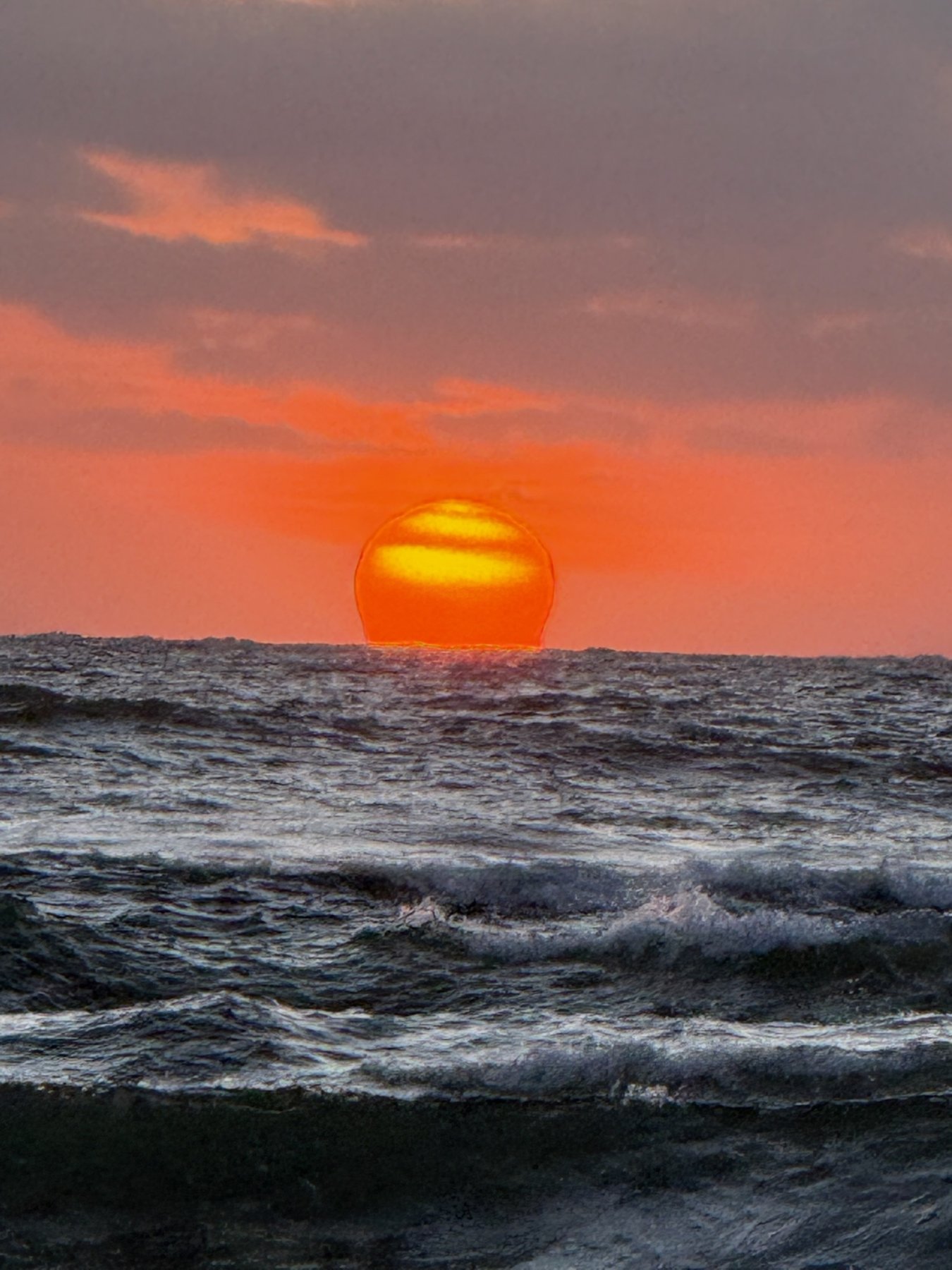
I live on the east coast. Where the sun rises. In summer, it actually comes up much earlier than I'd sometimes like. The days are long, the nights short, and sleep deprivation is not uncommon at this time of year.
Few people talk about the fantastic sunrises up here. Maybe it's because many prefer to keep their blinds closed and don't want to be woken by the morning sun. Or they simply live too far from the Kattegat.
On my days off, I happily let the first rays of sunshine into the house. The sunrise has become part of my everyday life now.
The sunset is different.
It takes us about 25 minutes to drive to the next spot where you can watch the sun sink into the sea. And it probably isn't even the best place for it. Shortly before and after St. Hans, it's as if the sun is almost rising again just as it's setting.
When you live and work here, it's not so easy to catch both natural spectacles. The truth is, we see the sunset much less often than we used to. We're usually already in bed by then. In exchange, we get up early, which suits our working hours very well.
Visitors, guests, and tourists often find this hard to understand. They ask why we don't drive to the sunset more often or why it doesn't matter to us anymore.
But that has nothing to do with a lack of romance.
Quite the opposite.
We don't live here on vacation. While others are on holiday, we're in the busiest time of year. That's just how it is when you work in tourism. When others are free, we're working.
When you have to get up at five in the morning, you usually have little interest in watching the sun sink into the sea at 11 PM and then driving home for another half hour.
Of course, we do it sometimes. Especially when we have dear guests or have the day off the next day. But even on my days off, I often just enjoy putting my feet up.
It's similar with the famous favorite spots.
I'm asked again and again what my favorite place in North Jutland is.
The honest answer is: I don't have one.
Not because there aren't beautiful places. There are countless ones here. But simply because I don't have the time to regularly sit somewhere on the beach and let the world be.
Denmark also makes high demands on those who live here. If you have multiple jobs, a house, a garden, and many obligations, your free time is limited.
When I have time to relax, I like to spend it in my own garden.
I've naturally created some lovely spots there. I can follow the path of the sun, hear the birds chirping, and watch the goldfish in my little pond, which has now grown in beautifully. Sometimes I even fish out a "water calf" so the goldfish can have their peace.
A large garden needs to be maintained too. There's no caretaker here to mow the lawn or trim the hedges. If everything is to look neat, we have to take care of it ourselves.
It takes time. But it brings us joy.
Many Danes in our circle treat themselves to several weeks on the boat in summer or travel to neighboring countries.
We're not there yet.
We haven't been here long and still have a lot to build. Before you can enjoy the fruits of your labor, you have to let them grow first.
I don't say this with envy. It's simply reality.
We consciously chose to live here. With everything that comes with it.
That's why we experience Denmark differently than people who come here on vacation.
When I walk through Skagen and see the yellow houses in the sunlight against the deep blue sky, I still delight in this sight. It's beautiful.
But often I walk with guests along the sea, telling them about the landscape, and I barely consciously perceive it myself anymore. Not because it's become less beautiful, but because it's become part of my everyday life.
If the sea suddenly disappeared, that would be terrible. Or if the pretty yellow houses were painted pink.
I'm truly grateful to be able to live here. But I no longer see it through the eyes of a tourist.
Because I don't just live here. I live here. That's the difference.
It's similar with many offerings that are open for tourists in summer. By September at the latest, most of them disappear again.
Then it becomes very clear which places live from tourism and which don't.
And something else has changed.
When we left Germany, we sold our house. Much of what had accumulated over decades was given away, sold, or disposed of.
We arrived here with remarkably little.
And honestly, that felt good.
Lighter.
Freer.
Of course, I could buy much of it back today for little money at the flea market, in the antique shops, or from unknown artists.
But that's exactly what I don't want to do.
Sometimes you only realize how little you really need when you've left almost everything behind.