When the sea suddenly becomes stronger than you are
If you know the Danish series Badehotellet, you might remember the scene where Leslie Frigh gets into trouble while swimming and is rescued by the maid Nana.
When I recently read something about so-called rip currents, I immediately thought of that scene.
Because situations like this can actually occur at many coastlines. And what's remarkable about it is: the danger often doesn't look dangerous at all.
Most people watch out for high waves, storms, or bad weather at the beach. That seems logical. Yet one of the greatest dangers can lurk precisely where the sea appears particularly calm.
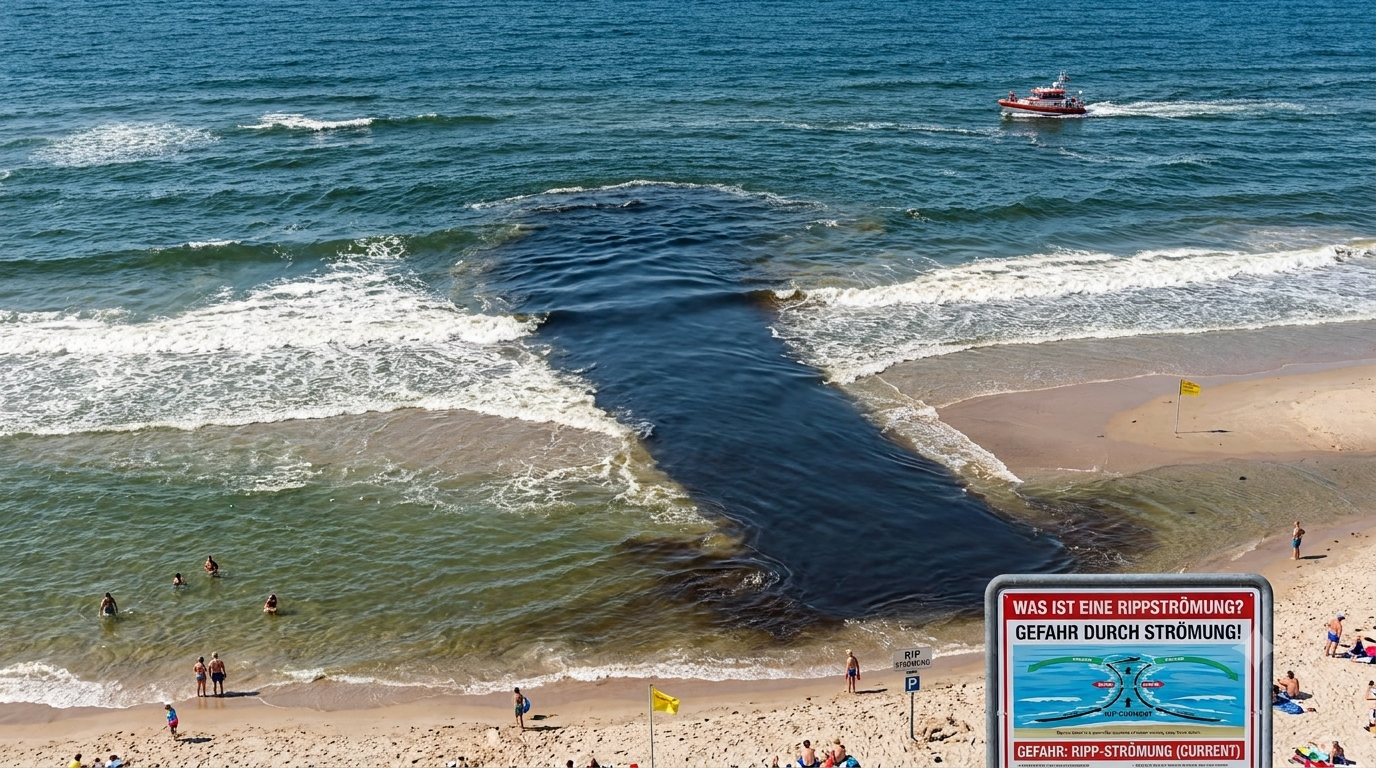
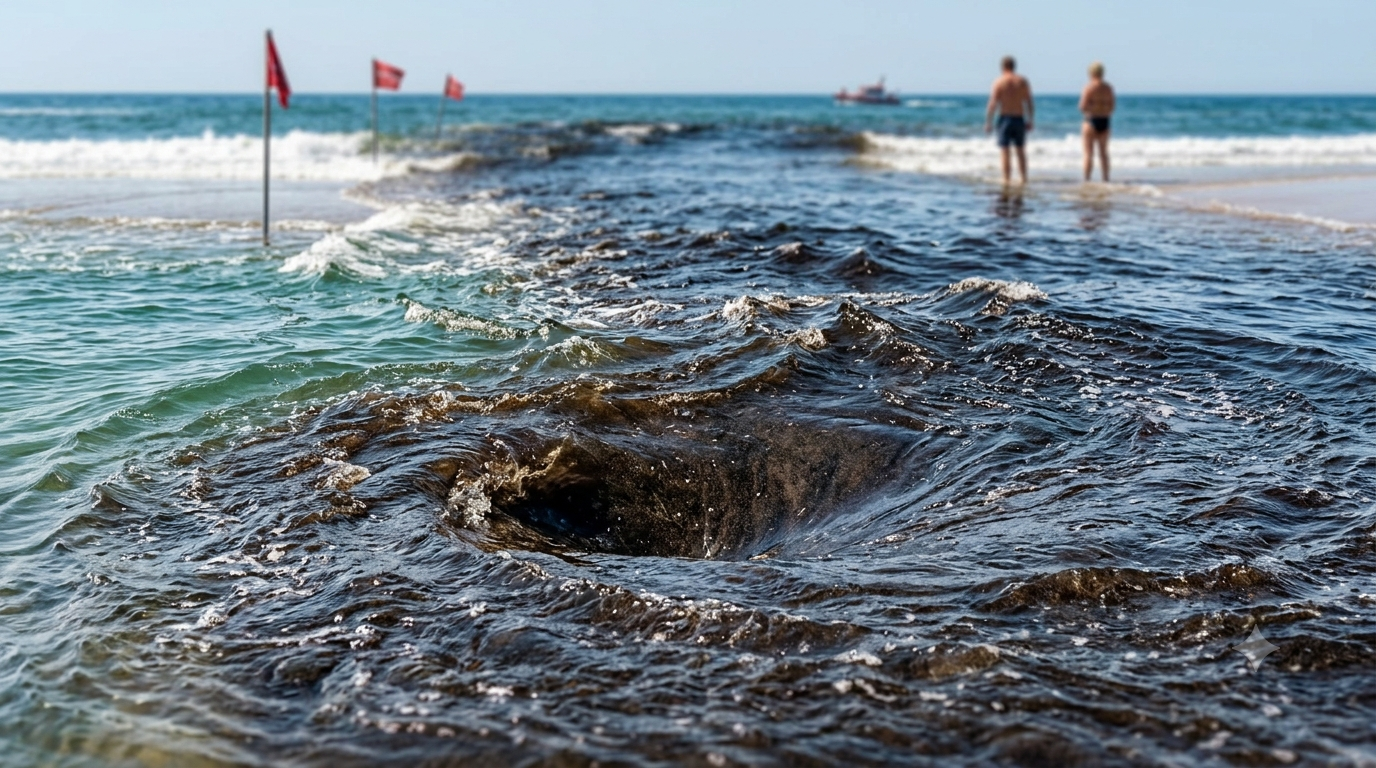
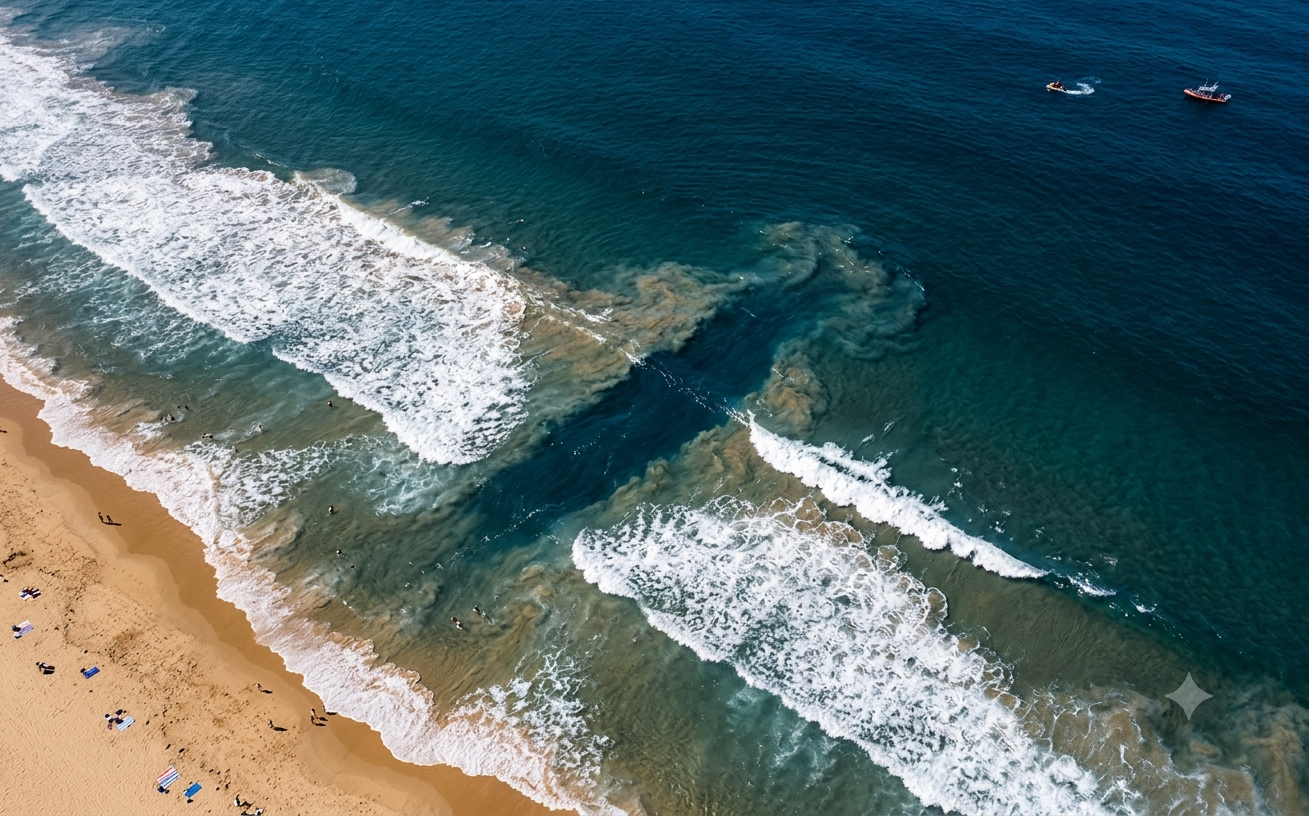
A rip current is not a current that pulls you underwater. That's a common misconception, but it's usually not correct. Instead, it transports water from the beach back out to the open sea, and sometimes the swimmer caught in it as well.
The tricky part: these areas often look more peaceful than their surroundings. On the left and right, waves are breaking, while in between the water seems calmer. Many people choose exactly this area because it looks safer.
Yet a actual current can form there, leading out to sea.
The real danger is often not the current itself, but the reaction to it.
When someone suddenly realizes the beach is getting farther and farther away, they get scared. The natural instinct is then to swim back with all your strength.
That's exactly what you shouldn't do.
Rip currents can be stronger than even good swimmers. Fighting against them causes you to exhaust your energy quickly and can lead to panic.
That's why lifeguards recommend something that sounds contradictory at first: stay calm and swim parallel to the shore. Such currents are usually only limited areas. If you swim out of the current sideways, you can then get back to the beach much more easily.
I was surprised how little known this topic actually is.
Perhaps it's because we usually want to see dangers. High waves look threatening. Strong wind too. An invisible current in what appears to be a calm section of the sea hardly attracts attention.
Especially now in summer, when many people are out at the North and Baltic Seas, it's worth observing the water a bit more carefully.
And perhaps also remembering that even the makers of Badehotellet depicted a situation that's closer to reality than you might initially think.
Because sometimes the spot with the highest waves isn't the most dangerous.
But the one that looks the most harmless.