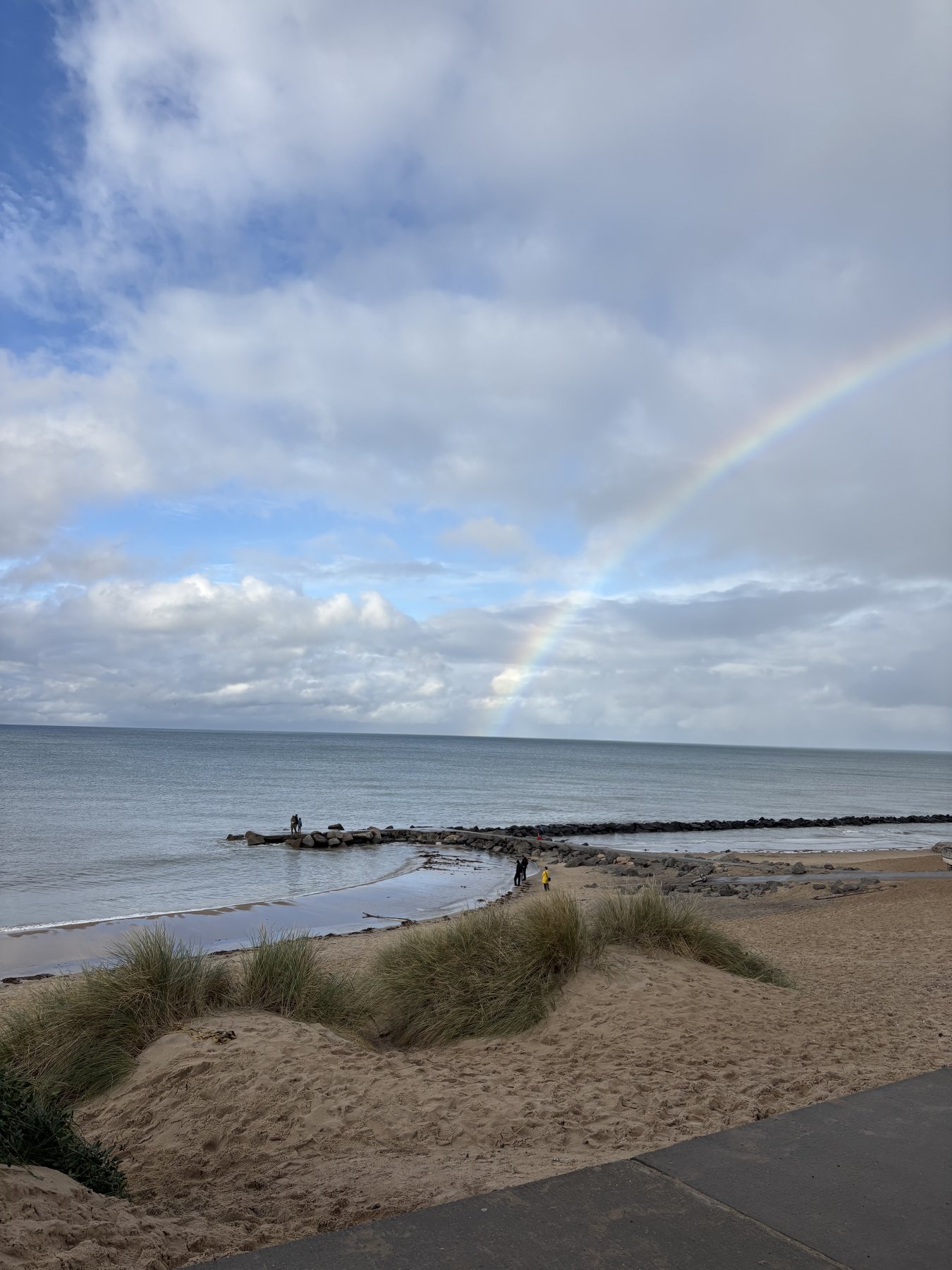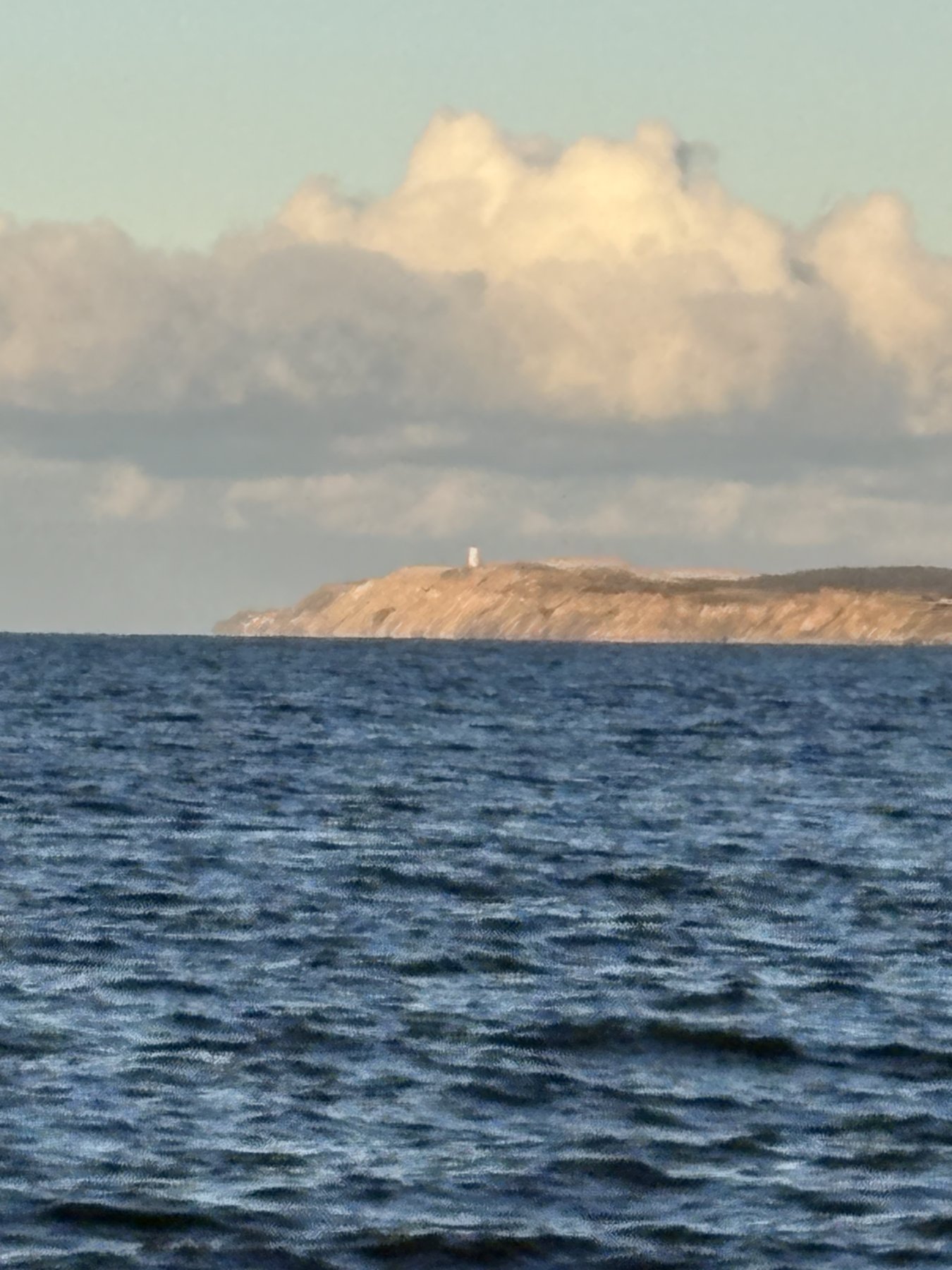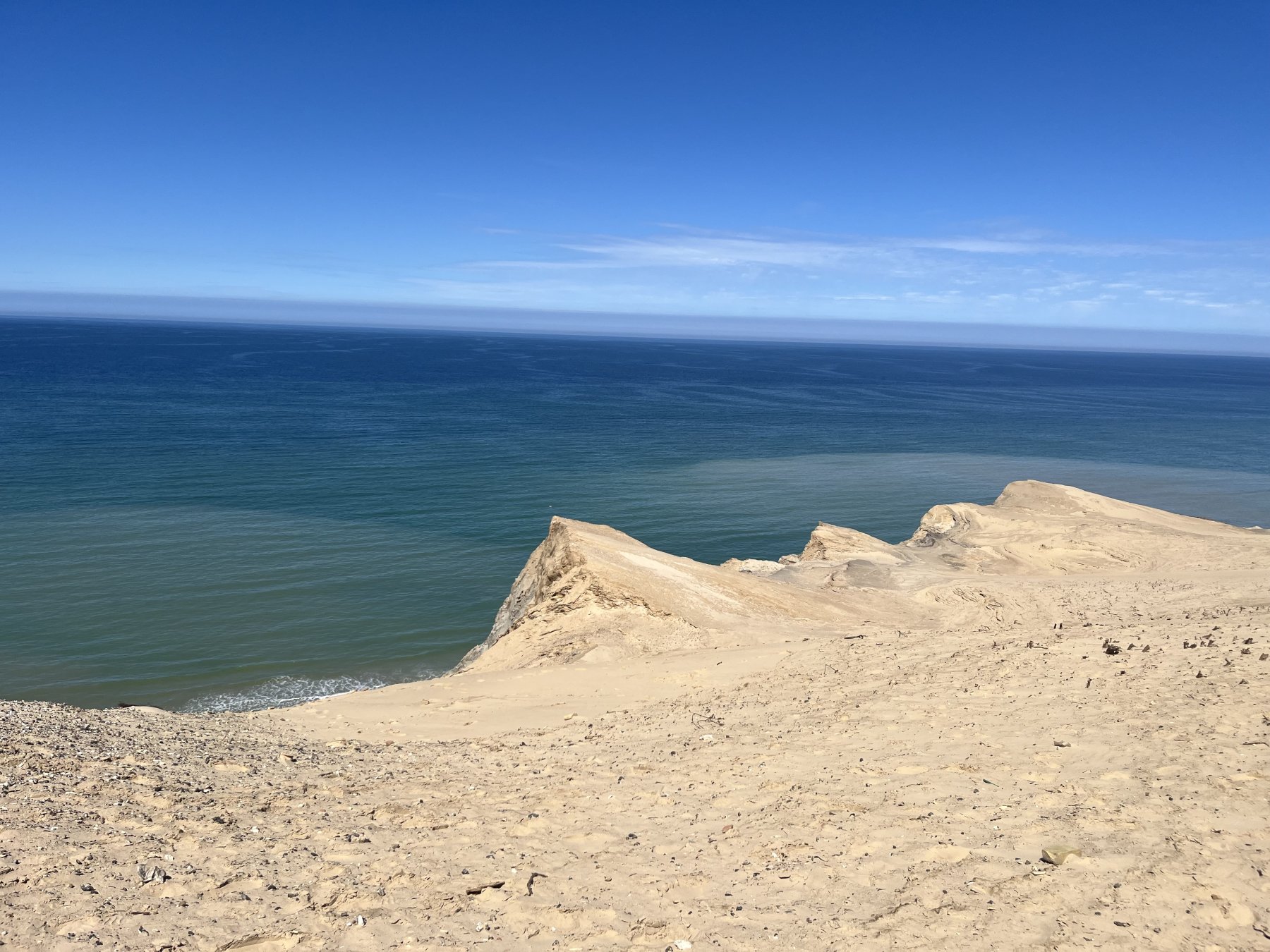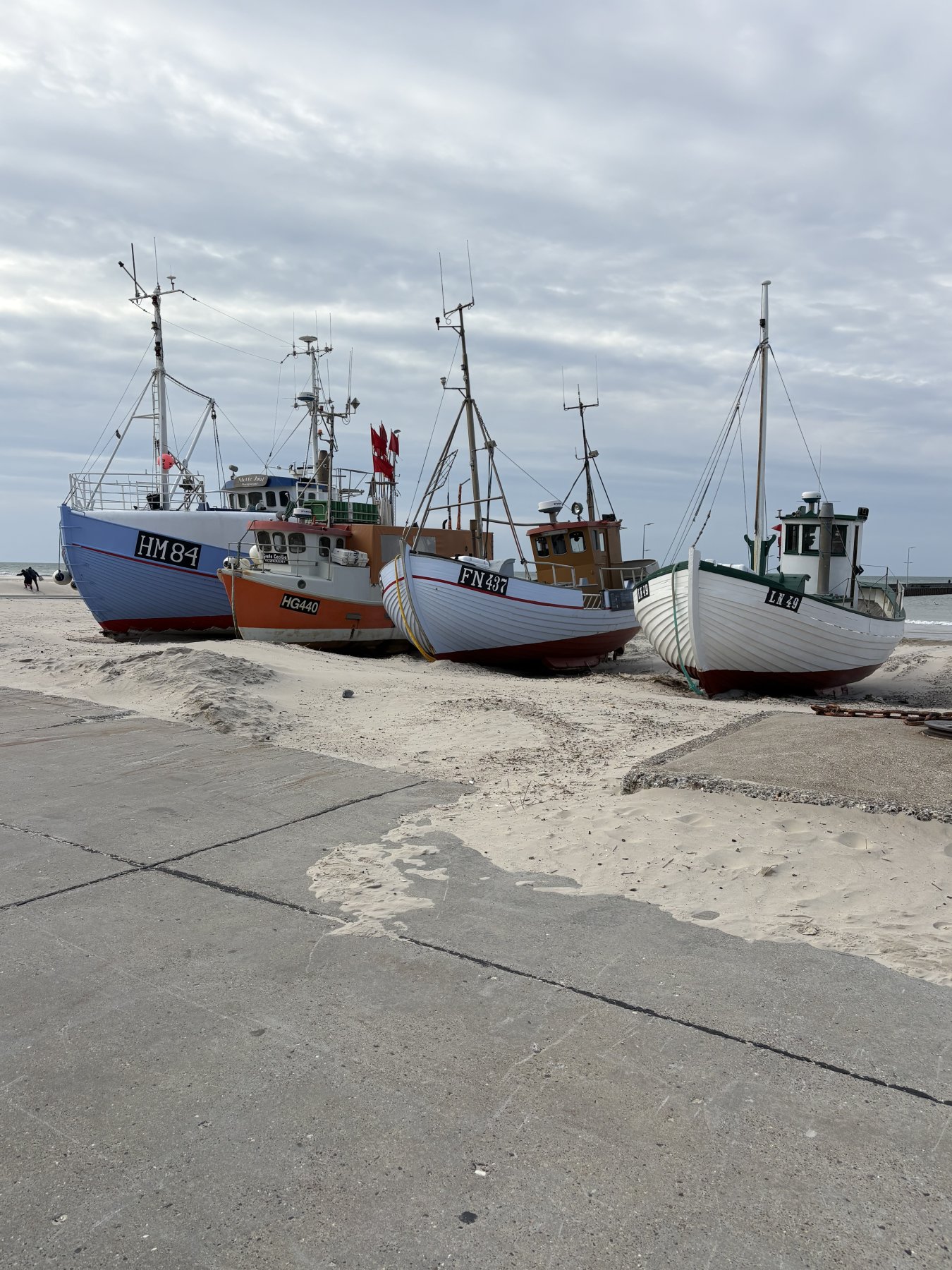
By the way, I live in North Jutland. If you want to get a sense of what that feels like, I'd recommend the Danish series Badehotel. It's set on this very coast, somewhere south of Skagen, and it conveys exactly what hangs in the air here: vast horizons, wind, a life that doesn't rush. Summer guests from the city encounter the quiet world of the province, and somehow it feels as though not much has changed between then and now.
The series spans almost two decades, from the late twenties into the forties. You watch it and feel as though time itself slows down. Not because nothing happens, but because things here have their own rhythm. The settings still exist, the names of the protagonists are familiar from everyday life, and that's exactly what gives you the feeling of belonging.
Perhaps that's why the series has lost none of its impact in Denmark to this day. And it draws people here. Tourists from all over Denmark and abroad visit the region because they're seeking exactly this feeling that the series conveys. Hotels like Svinkløv Badehotel on the Jammerbucht and Hjorths Badehotel near Skagen know this and deliberately market precisely this atmosphere: deceleration, historical elegance, connection to nature.
It's a confirmation for the people here that their landscape is something special. Something you don't need to explain once you've been there.
But if you think you know Denmark because you know North Jutland, you're just as mistaken as someone who's been to Hamburg once and thinks they know all of northern Germany, or someone who's taken a tour of Berlin and believes they now know all German cities. Denmark is more than a coastline and a feeling of life. It's a country of 43,094 square kilometers, consisting of the Jutland Peninsula and over four hundred named islands, of which between seventy and seventy-four are permanently inhabited. The coastline stretches over 8,750 kilometers, and no point in the country is more than fifty-two kilometers from the sea.
That's not a geographical footnote, that's a lived reality. The terrain is flat, almost meditative; the highest natural elevation measures just 170.86 meters. A country that doesn't tower up, but spreads out. And the nationally famous singer Michael Falch even wrote a song about it: the song "Danmark (Land uden høje bjerge)" with lyrics by Poul Henningsen is one of the most profound love letters to the Danish landscape and mentality.
Administratively, Denmark is divided into five regions: North Jutland, Central Jutland, Southern Denmark, Zealand, and the Capital Region. Copenhagen dominates with a metropolitan area of 1.39 million people, a weight you feel even here in the north, despite being hundreds of kilometers away. Then come Aarhus with around 301,000 inhabitants, Odense with 185,000, Aalborg with 122,000, and Esbjerg with around 71,000. In total, the country has around six million people.
But knowing the major cities doesn't mean you know the whole country. The metropolitan areas are a different Denmark: denser, faster, more multifaceted, shaped by people who have come here from all over the world. Copenhagen is the cosmopolitan metropolis, international, colorful, loud. Aarhus is known as the city of students and young people, a vibrant university town with a thriving cultural scene.
Odense is the bourgeois heart of Funen, solid and manageable. Aalborg has transformed itself over recent years from an industrial city into a surprisingly vibrant center of the north. And Esbjerg, the port city in the west, lives from the North Sea, from fishing, and from the oil industry.
Around 16.3 percent of the population have a migration background, and the majority of them live in the cities. That includes about 35,000 to 40,000 Germans who have taken the same step I did. And around 304,000 people from predominantly Islamic countries, a topic that has passionately and controversially shaped public debate in Denmark for years and has deeply divided the country in some respects.
In the flat countryside, though, in the small communities of North Jutland, in places like Skagen, Strandby, Elling, and Jerup, the world looks different. Quieter, more manageable, more down-to-earth. Here people know each other, here the Folkekirken, the Danish National Church, still plays a central role in community life and provides a framework for everyday life that goes far beyond Sunday services.
The official language in Denmark is Danish. In South Jutland, however, German has officially recognized status as a minority language, a living echo of the turbulent border history between the two countries that still resonates today. About 86 percent of the population speak English, making Denmark one of the most linguistically accessible countries and making the transition considerably easier for newcomers.
And here, in this flat, quiet, idiosyncratic country, the Janteloven (there's a small note about this at the end of the text) is not a theory, but lived reality: nobody is more than anyone else, nobody puts themselves above the community. It's an attitude that newcomers have to learn first, but once understood, it explains a lot.
And so the circle closes. Badehotel doesn't play out in the city, not in the hustle and bustle, not in the upheaval. It plays right here, on this coast, in this quiet. Whoever knows this area recognizes it in every frame. Whoever hasn't been here yet gets a sense of what awaits them. And whoever simply wants to slow down for an evening is also in good hands.
The series is currently airing on the German broadcaster One. Watched in Danish, it unfolds its own special charm, but it's absolutely worth watching in German too.
Note: The Janteloven has a remarkable dual identity that is often overlooked. It was formulated by Aksel Sandemose, who was born in 1899 in the Danish town of Nykøbing Mors, later emigrated to Norway, and subsequently wrote in Norwegian. In his 1933 novel "A Fugitive Crosses His Tracks," he described the ten rules of the Janteloven in a fictional town called Jante, which, as Sandemose himself openly admitted, was based on his Danish birthplace. What he described was the social narrowness and quiet control he had experienced in his Danish childhood: no one should believe they're something special, no one should put themselves above the others.
Today, the Janteloven is considered a universal Scandinavian phenomenon; in Norway and Sweden the term is just as firmly embedded in everyday language as it is in Denmark. Here, though, it's particularly deeply rooted in the collective self-understanding. A term written in Norwegian, but conceived in Danish.