The path to permanent residence in Denmark
Denmark is an attractive place to live and work for many people. But those who want to stay permanently quickly discover: the path to unlimited residence permit ("Permanent opholdstilladelse") differs dramatically depending on your origin. The distinction between EU citizens and third-country nationals is particularly important.
1. The fundamental distinction: EU or non-EU?
In Denmark, different rules apply to EU citizens than to people from countries outside the EU or EEA.
EU/EEA citizens and Swiss nationals
For EU citizens, residence is based on the right of free movement. Those who work, are self-employed, study, or can support themselves in Denmark are generally allowed to stay legally in the country.
After five years of continuous lawful residence, the right to permanent residence can be acquired.
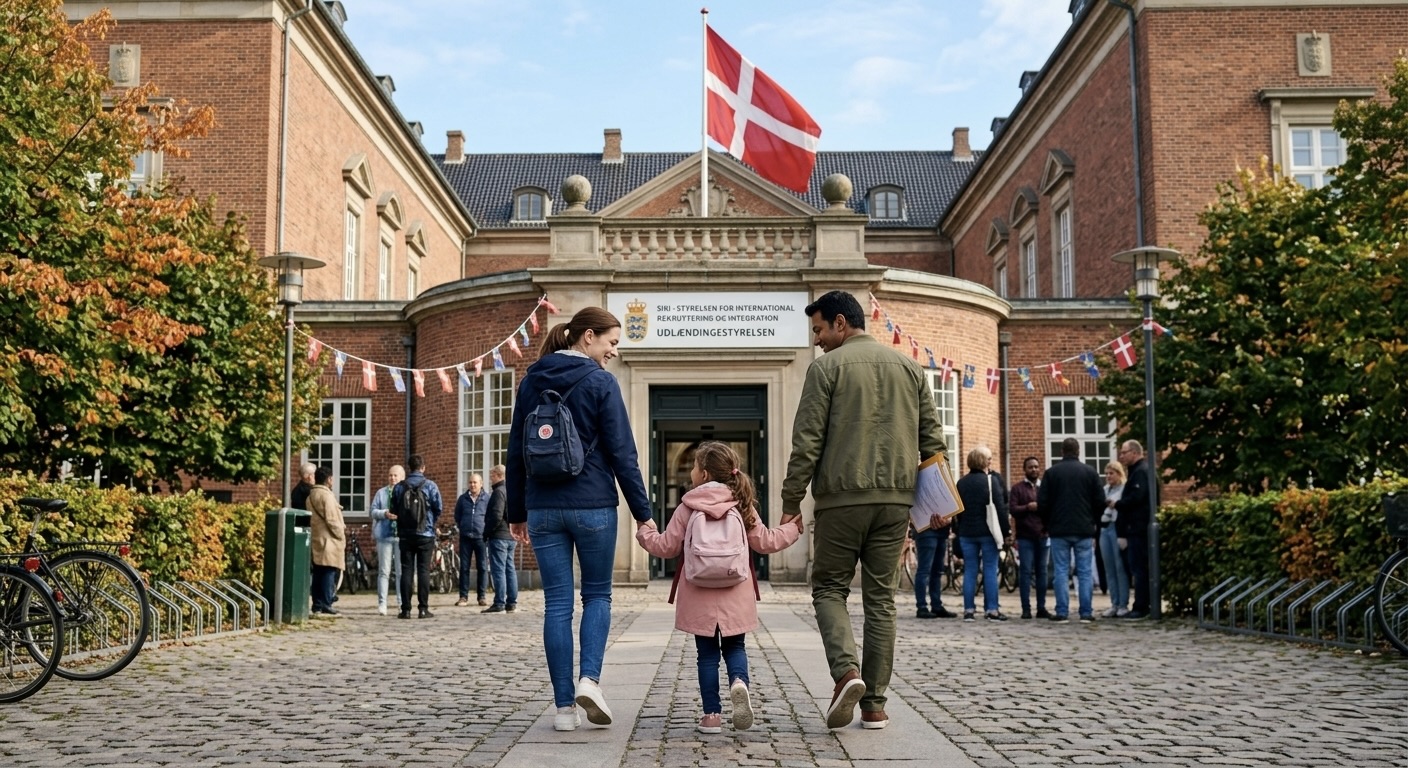
The application is processed through SIRI (Styrelsen for International Rekruttering og Integration), where you apply for what's called a "Bevis for permanent ophold."
Compared to third-country nationals, the requirements are considerably lower. However, the five years must be clearly documented. This includes, for example:
- Employment relationships
- Self-employment
- Sufficient financial means
- Lawful residence according to EU rules
Even for EU citizens, longer interruptions, missing documentation, or unclear employment relationships can cause problems.
Important to know: Even permanent residence rights can be lost under certain circumstances, such as very long periods spent abroad outside Denmark.
2. Permanent residence for non-EU citizens
For third-country nationals, significantly stricter requirements apply. This isn't just about length of residence, but about comprehensive integration into the Danish labor market and society.
As a rule, you must have been legally resident in Denmark for at least eight years. Under eased conditions, however, the required residence period can be shortened. For this, additional integration requirements must be met, such as higher language proficiency, long-term employment, a certain income, or passing additional tests.
The main requirements are:
- Residence period: Normally at least 8 years of lawful residence in Denmark.
- No criminal record: Certain criminal convictions can prevent permanent residence.
- No public debts: There must be no significant outstanding debts to public authorities.
- Social benefits: In the years before applying, you must not have received certain benefits under the Activation Act or Integration Act.
- Important: Not every state benefit is automatically problematic. Unemployment benefits ("dagpenge"), for example, normally don't count.
- Employment: You must have been employed significantly within the last four years. Requirements correspond to roughly 3 years and 6 months of full-time employment.
- Current employment: At the time of decision, there must normally still be relevant employment.
- Language proficiency: You're normally required to pass the "Prøve i Dansk 2" or an equivalent test. Those wanting easier conditions or faster recognition often need to demonstrate higher language proficiency.
For non-EU citizens, applications are normally processed by the Udlændingestyrelsen, even when using the joint portal "Ny i Danmark."
3. The biggest hurdles in everyday practice
Many applications fail not because of one major issue, but because of small interruptions or missing documentation.
- Employment interruptions: Short periods without work can become problematic if they mean you no longer reach the required employment period.
- Language tests: Danish language tests are often underestimated. The higher-level requirements in particular often demand several years of consistent learning.
- Social benefits: Certain benefits can cause important deadlines to be recalculated.
- Documentation: Pay slips, employment contracts, tax documents, and proof of residence should be carefully kept for years.
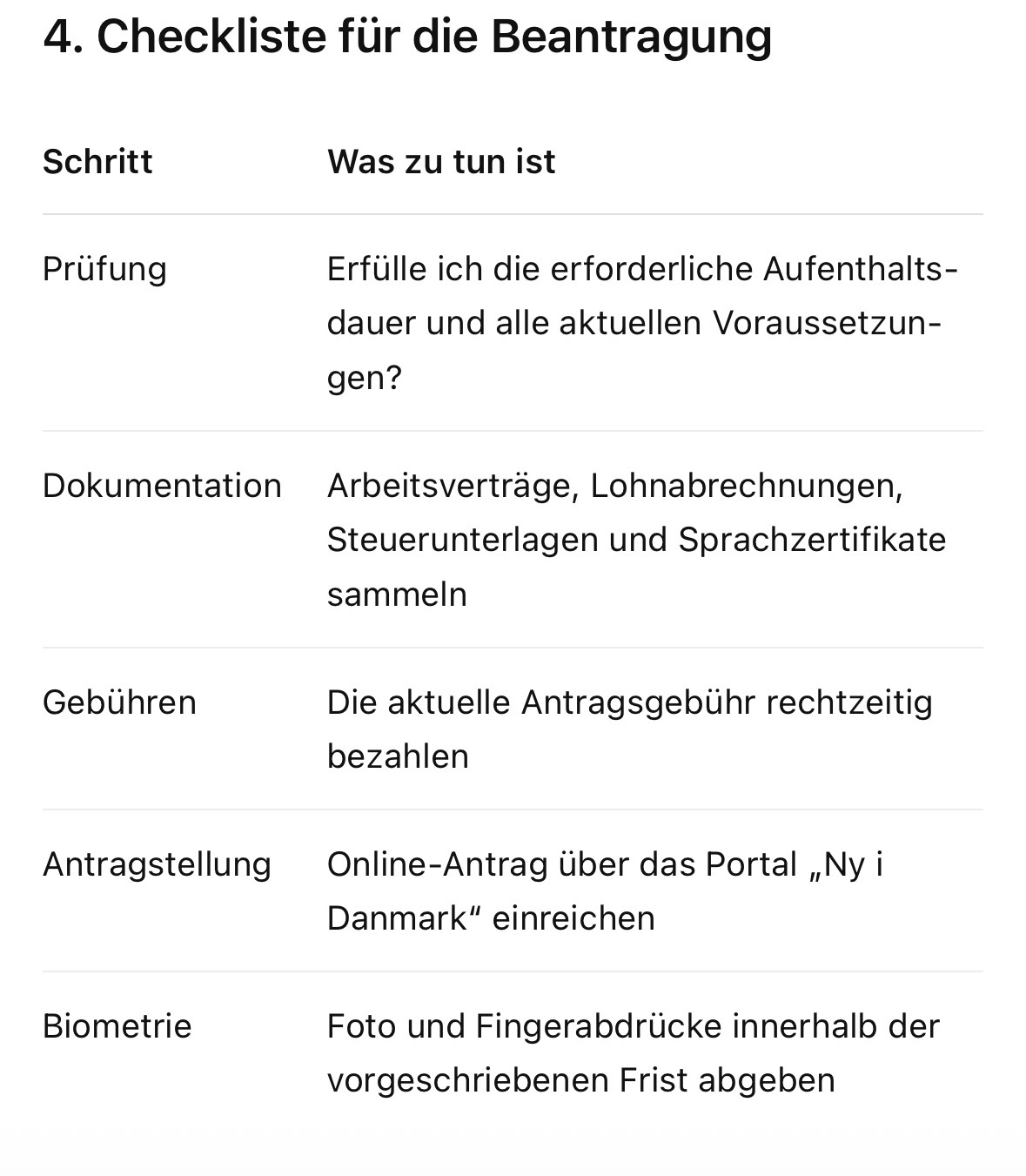
4. Checklist for application
Review: Do I meet the required residence period and all current requirements?
Documentation: Gather employment contracts, pay slips, tax documents, language certificates
Fees: Pay the current application fee on time
Application: Submit online application through the "Ny i Danmark" portal
Biometrics: Provide photo and fingerprints within the prescribed timeframe
5. Integration matters in Denmark
Denmark places great value on people not only living in the country, but actively participating in community life.
Engagement in clubs, cultural projects, church congregations, or local communities can therefore be viewed positively. While it doesn't replace official requirements, it often demonstrates a strong connection to Danish society and culture.
Especially in smaller towns, this kind of community involvement often plays a bigger role than many initially realize.
For EU citizens, the path to permanent residence in Denmark is relatively straightforward, as long as the residence was continuously lawful and can be documented.
For non-EU citizens, however, the process is considerably more demanding. Language proficiency, employment, self-sufficiency, and long-term integration play a central role.
Those who plan ahead, keep their documents organized, and actively integrate into Danish life significantly improve their chances of being able to stay permanently in Denmark.